Practical
Is Guanacaste Safe? What the Data Actually Says
Guanacaste Experiences editorial team
·
5 October 2026
·
8 min read
In this guide
What the numbers actually areThe part that catches people out: calm waterThere is almost certainly no lifeguardIf you are caught in oneCrime, in proportionThe roadTours, operators and who is actually certifiedSearch this question and you will get advice about pickpockets, taxis and leaving your phone on a beach towel. That advice is not wrong, but it answers a question about inconvenience while presenting itself as an answer about danger.
The peer-reviewed analysis of Costa Rica's own death records says something different and much plainer: "Drowning is the primary cause of unintentional death among international visitors" to Costa Rica. Not robbery. Not road accidents. The sea.
What the numbers actually are
The same study, working from Organismo de Investigación Judicial records, counts 936 coastal drowning deaths between 2001 and 2019 — 62% Costa Ricans and 38% foreigners. The Red Cross figures for deaths in water accidents have risen every year this decade.
Cruz Roja Costarricense — deaths in water accidents, as reported by El Observador.
Year
Deaths
2020
96
2021
108
2022
119
2023
132
2024
140
And the single most useful statistic for anyone choosing where to swim, attributed to the Red Cross: 99% of these incidents happen on beaches with no lifeguard service and dangerous rip currents.
Keep this in proportion
These are national figures across a country of five million people with two coastlines and a very large number of annual visitors. Costa Rica is not a dangerous country, and the UK Foreign Office advises against travel to no part of it. The point is not that you should be frightened — it is that the risk sits somewhere other than where most advice points.
The part that catches people out: calm water
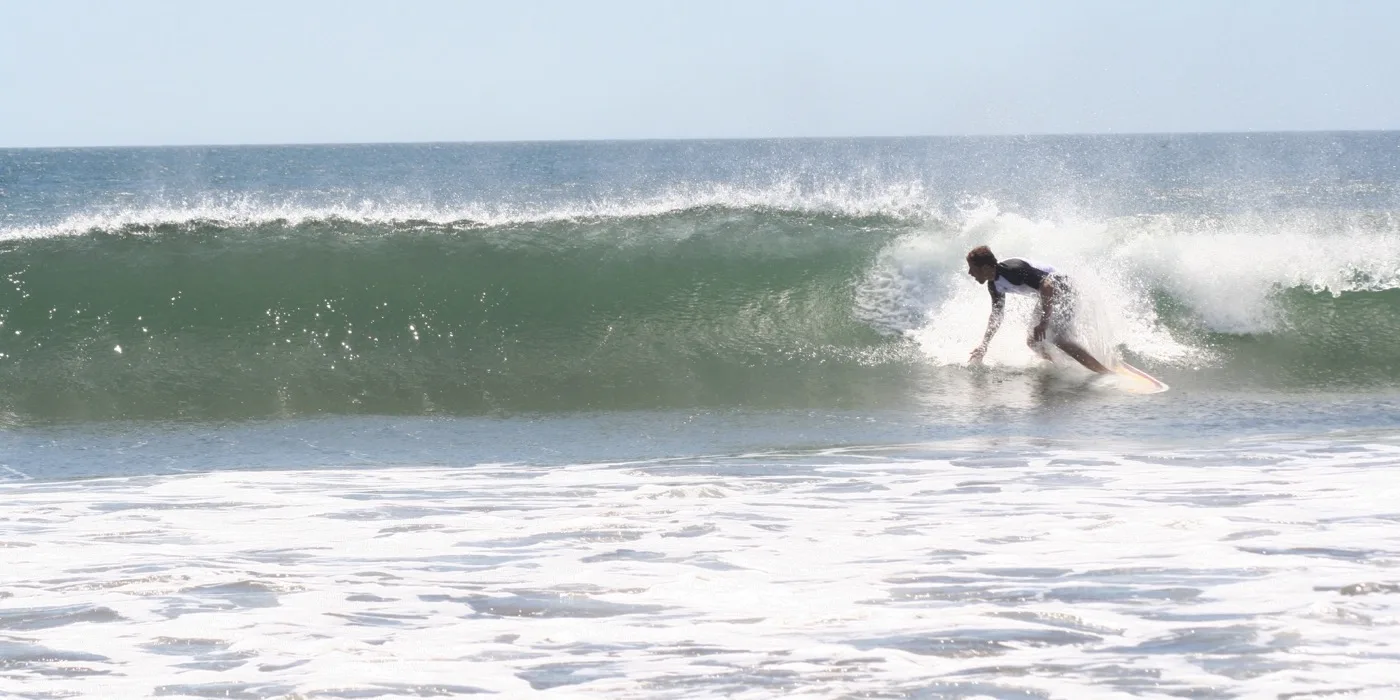
This is the finding worth carrying with you. A second peer-reviewed study of the same records found that drownings peak when the waves are smaller, not larger — "drownings peak during the negative phase of the PNA when wave heights are significantly smaller, which may reflect a tendency for beach users to enter calm water when the beach tends to have a TBR morphology."
In plain terms: big surf looks dangerous and people stay out of it. A flat, inviting sea on a beach whose sandbars have arranged themselves into rip channels looks safe, and people walk straight in. The day the water looks most tempting is not the day it is safest.
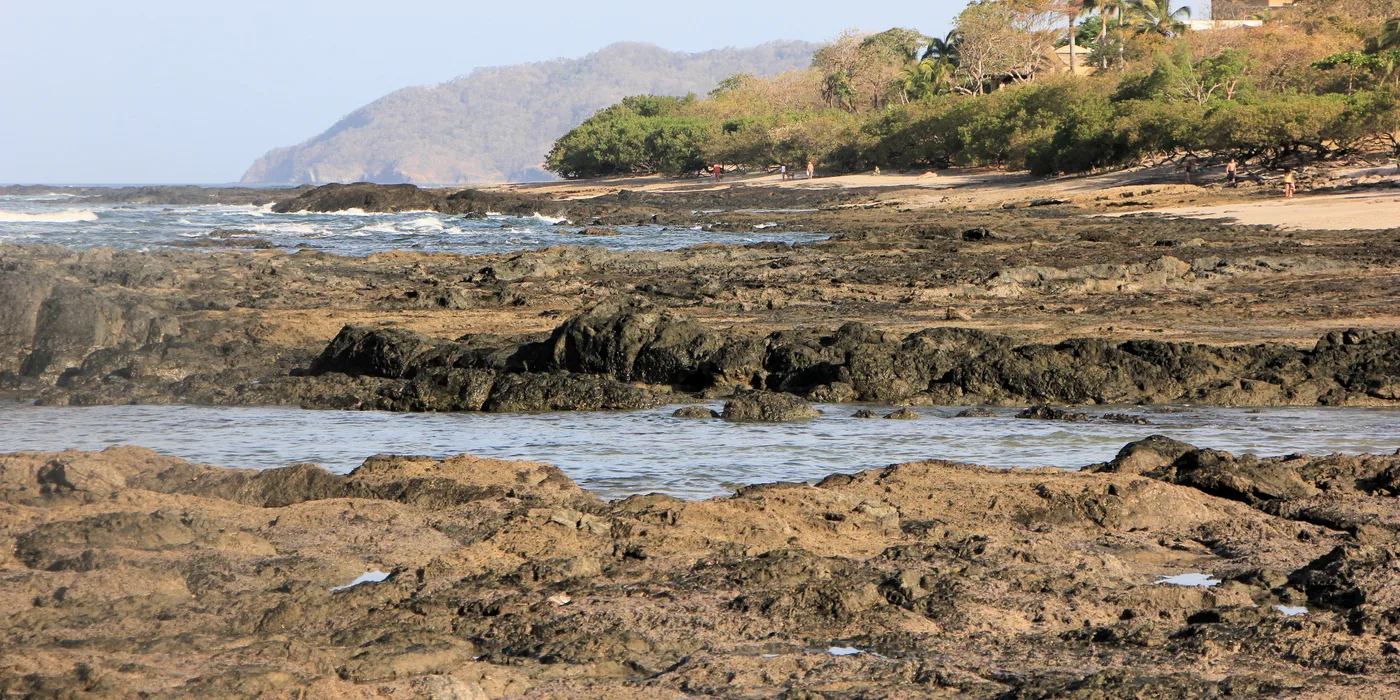
Rip currents form, in the US National Weather Service's description, "when there are alongshore variations in wave breaking", and are "frequently found next to both natural and man-made hard structures such as headlands, groins, jetties, and piers". Guanacaste's beaches are full of rock headlands and reef shelves. The same source notes that "even in weaker rip currents, it can be difficult to stand in place at waist depth against persistent flow" — you do not need to be out of your depth to be in trouble.
There is almost certainly no lifeguard
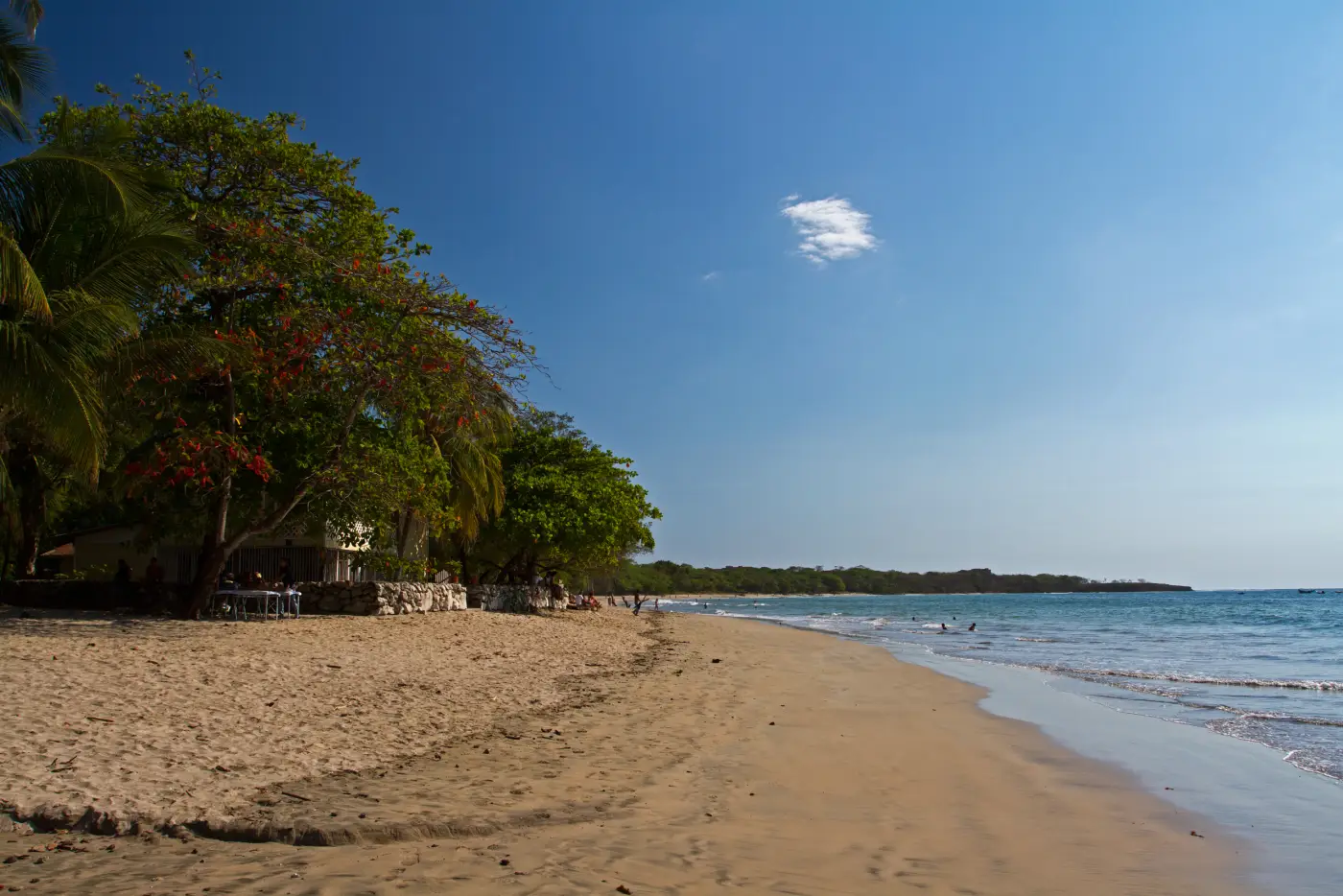
This is the fact most trip planning misses. As of the most recent reporting we could find, Tamarindo and Sámara were the only beaches in Guanacaste with lifeguards at all — Tamarindo with two under an ICT–Red Cross agreement, Sámara with two regular volunteers and two more who help out, kept going by local businesses feeding and housing them. That report is from 2021, so treat current staffing as unknown rather than assumed. If having someone watching the water matters to you — travelling with children, or not a confident swimmer — that is a real argument for basing yourself in Tamarindo or Sámara rather than a quieter beach.
The official position is no more reassuring when you read it carefully. The ICT does publish a register of authorised lifeguards — but it registers organisations, not beaches, and names no beach as guarded. And the government's own 239-page beach atlas, which rates more than 300 beaches for rip-current danger on a scale from *bajo* to *muy alto*, says of the Papagayo and Playas del Coco stretch: Hasta donde se conoce, no hay ninguna playa con guardavidas en este tramo. — as far as is known, there is no beach with lifeguards on this stretch.
What this means in practice
On most Guanacaste beaches, nobody is watching the water, there is no flag system, and there may be no sign. If you get into difficulty, the people who will notice are whoever happens to be nearby. Swim where other people are swimming, go in with someone, and treat an empty beach as a reason for more caution rather than less.
If you are caught in one
Worth reading before you need it, from the National Weather Service:
1.
Relax. A rip pulls you out, not under. Panic and exhaustion are what drown people.
2.
Do not swim against it. You will not win, and that is where the exhaustion comes from.
3.
Swim parallel to the shore until you are out of the flow, then angle back in.
4.
Face the shore and call or wave for help if you cannot get out of it yourself.
Our guide to learning to surf here goes through the Guanacaste beaches sector by sector using the official atlas, including which stretches it rates most dangerous and why beach-level ratings are too coarse to pick a swimming spot from.
Crime, in proportion
The UK Foreign Office advises against travel to no part of Costa Rica. What it does say is worth taking at face value rather than inflating: "Gang-related violence, including shootings, has become more frequent in urban areas, including some locations popular with visitors." That is a statement about urban Costa Rica, and Guanacaste's beach towns are not where that sits.
The practical advice is unglamorous and effective. Do not leave luggage in a parked car — "either in view or in the boot". Watch wallets and valuables on the beach, where the standard loss is a bag left on a towel while everybody swims. And in bars, "avoid leaving drinks unattended… there have been reports of 'spiked' drinks resulting in assault and theft".
The one that is not petty
The Foreign Office records "deaths and cases of serious illness caused by alcoholic drinks containing methanol in Costa Rica". This is a real and occasional problem with cheap spirits rather than with beer, wine or branded bottles poured in front of you. It costs nothing to avoid unlabelled spirits and very cheap cocktails.
The road
Driving here is mostly straightforward on the paved routes between the beach towns, and our car rental guide covers the fines, the licence rules and the 4×4 question in detail — including the finding that the state recommends a 4×4 for only four places out of the 34 national park pages we checked.
Two things belong in a safety guide rather than a rental guide. The first is night driving: unlit roads, no verges, livestock, cyclists and pedestrians in dark clothing. Arriving somewhere after dark on your first night in an unfamiliar car is the single most avoidable risk on a Guanacaste trip, and planning your arrival day around sunset is the fix.
The second is river crossings, where the rule is absolute and worth quoting exactly: "No insurance coverage applies if a rental vehicle enters water. This rule applies regardless of the type of insurance selected and regardless of whether the vehicle is a 4×4." A crossing that looks shallow is a total loss you pay for yourself.
Tours, operators and who is actually certified
The Foreign Office puts it mildly: "Safety standards for adventure activities and on small boats are variable." Costa Rica has excellent operators and some that are not, and the licensing picture is thinner than visitors assume.
Surf instruction is the clearest example. According to La Nación, en Costa Rica no existe ninguna certificación oficial del Estado para instructores de surf — there is no official state certification for surf instructors at all. An ISA qualification costing over $400 is a private credential whose diploma no tiene validez legal en el país. That does not mean instructors are unqualified; it means "certified" on a website is a claim rather than a licence, and asking what the credential actually is remains a fair question.
For boats, the sensible checks are the boring ones: enough lifejackets for everyone aboard and worn rather than stowed, a skipper who gives a briefing, and an operator who cancels when conditions are poor. An operator who has cancelled on you once is usually a good sign.
Is Guanacaste safe for tourists?
Broadly yes — the UK Foreign Office advises against travel to no part of Costa Rica, and Guanacaste's beach towns are not where its urban violence sits. The risk that is genuinely elevated is the sea: drowning is the primary cause of unintentional death among international visitors to Costa Rica.
Do Guanacaste beaches have lifeguards?
Almost none. The most recent reporting we could find named Tamarindo and Sámara as the only beaches in the province with lifeguards, and the government's own beach atlas says of the Papagayo and Coco stretch that as far as is known no beach there has them. The ICT register lists organisations, not beaches.
When are rip currents most dangerous?
Counterintuitively, when the sea looks calmest. Peer-reviewed analysis of Costa Rican records found drownings peak when wave heights are significantly smaller — people enter flat-looking water on beaches whose sandbars have formed rip channels.
What should I do if caught in a rip current?
Relax, do not swim against it, swim parallel to the shore until you are clear of the flow, then angle back in. If you cannot get out, face the shore and call or wave for help. A rip pulls you out, not under.
Is it safe to drive in Guanacaste?
On paved routes between the beach towns, generally yes. Avoid driving at night — unlit roads, livestock and pedestrians in dark clothing — and never drive into a river crossing: rental insurance does not cover a vehicle that enters water, regardless of the policy or whether it is a 4×4.
Is petty theft a problem?
It is the most common issue visitors meet. The Foreign Office advises not leaving luggage in a parked car, in view or in the boot, and watching valuables on the beach. The usual loss is a bag left unattended while everyone is in the water.
Are surf instructors in Costa Rica certified?
There is no official state certification for surf instructors in Costa Rica. Private qualifications such as the ISA exist but carry no legal validity in the country, so "certified" on a website is a claim worth asking about rather than a licence.
Sources
Facts in this guide were checked against these references on the dates shown.
Segura, Arozarena, Koon & Gutiérrez — “Coastal drowning in Costa Rica” (peer-reviewed, OIJ death records) — Analysis of official Organismo de Investigación Judicial death records. States that “Drowning is the primary cause of unintentional death among international visitors” to Costa Rica. Records 936 coastal drowning deaths between 2001 and 2019, of which 62% were nationals and 38% foreigners. (accessed 5 October 2026)
Arozarena, Houser, Gutiérrez Echeverría & Brannstrom — “The rip current hazard in Costa Rica” (peer-reviewed) — Using OIJ records, finds that “drownings peak during the negative phase of the PNA when wave heights are significantly smaller, which may reflect a tendency for beach users to enter calm water when the beach tends to have a TBR morphology” — drownings peak when waves are smaller, not larger. (accessed 5 October 2026)
El Observador — “2024 rompe récord de muertes por accidentes acuáticos” (Cruz Roja Costarricense figures) — Cruz Roja Costarricense figures for deaths in water accidents: 140 in 2024, 132 in 2023, 119 in 2022, 108 in 2021 and 96 in 2020 — rising every year. Cruz Roja quoted: “Este año hemos tenido un incremento preocupante en las muertes y las personas deben aumentar las precauciones.” (accessed 5 October 2026)
Delfino.cr — “Programa Caribbean Guard redujo las muertes por ahogamiento” (Cruz Roja) — Attributed to Cruz Roja Costarricense: “El 99% de estos incidentes ocurren en playas sin servicio de guardavidas y con presencia de corrientes de resaca peligrosas”, and that more than 270 drowning deaths were recorded in the previous two years. (accessed 5 October 2026)
Voz de Guanacaste — “Tamarindo and Sámara are the only beaches in Guanacaste with lifeguards” — Reports that Tamarindo and Sámara were at that date the only beaches in Guanacaste with lifeguards: Tamarindo with two under an ICT–Red Cross agreement, community-funded from 2015 to 2019 beforehand, and Sámara with “two regular volunteers and two who help out from time to time”, sustained by local businesses feeding and housing them. Published 2021, so current staffing should be treated as unknown rather than assumed. (accessed 5 October 2026)
ICT — Guardavidas Autorizados (official register of authorised lifeguard organisations) — The Instituto Costarricense de Turismo publishes a register of national lifeguard organisations and coastal local governments that nominate representatives to the Comisión Nacional para la Prevención y Atención de Ahogamientos. It registers organisations, not beaches, and names no beach as guarded. (accessed 5 October 2026)
ICT & Universidad Nacional — Atlas de Playas de Costa Rica con énfasis en la seguridad — The official 239-page beach atlas published by the Instituto Costarricense de Turismo with the Universidad Nacional, covering more than 300 beaches across 30 sectors, rating each for rip-current danger on a scale of bajo, medio, alto and muy alto. Of the Papagayo and Playas del Coco stretch it states: “Hasta donde se conoce, no hay ninguna playa con guardavidas en este tramo.” (accessed 5 October 2026)
NOAA / US National Weather Service — Rip current science and survival — Rip currents form “when there are alongshore variations in wave breaking”, are “frequently found next to both natural and man-made hard structures such as headlands, groins, jetties, and piers”, and “even in weaker rip currents, it can be difficult to stand in place at waist depth against persistent flow”. Survival guidance: relax, do not swim against the current, swim parallel to shore, and face the shore and call or wave for help if you cannot get out. (accessed 5 October 2026)
GOV.UK — Costa Rica travel advice: safety and security (UK Foreign, Commonwealth & Development Office) — No advice against travel to any part of Costa Rica. On crime: “Gang-related violence, including shootings, has become more frequent in urban areas, including some locations popular with visitors.” Advises travellers to “avoid leaving luggage in a parked car, either in view or in the boot” and to “watch wallets and valuables when on the beach”. On drinks: “Avoid leaving drinks unattended in bars as there have been reports of ‘spiked’ drinks resulting in assault and theft” and “There have been deaths and cases of serious illness caused by alcoholic drinks containing methanol in Costa Rica.” On the sea: “Rip currents are very common and there are often no lifeguards. Seek reliable local advice.” On activities: “Safety standards for adventure activities and on small boats are variable.” (accessed 5 October 2026)
La Nación — “Instructores de surf denuncian que extranjeros dan clases ilegalmente” — States that “en Costa Rica no existe ninguna certificación oficial del Estado para instructores de surf”, and that an ISA certification costing over $400 is a private qualification whose “diploma no tiene validez legal en el país”. (accessed 5 October 2026)
Adobe Rent a Car — Costa Rica rental car road restrictions — States verbatim: “No insurance coverage applies if a rental vehicle enters water. This rule applies regardless of the type of insurance selected and regardless of whether the vehicle is a 4×4.” (accessed 5 October 2026)
Plan this trip
Browse the tours that fit what you’ve just read — real operators, real prices, book direct.
Read the beach-by-beach surf guide