Planning
First Time in Guanacaste: The Honest Beginner’s Guide
Guanacaste Experiences editorial team
·
15 September 2026
·
10 min read
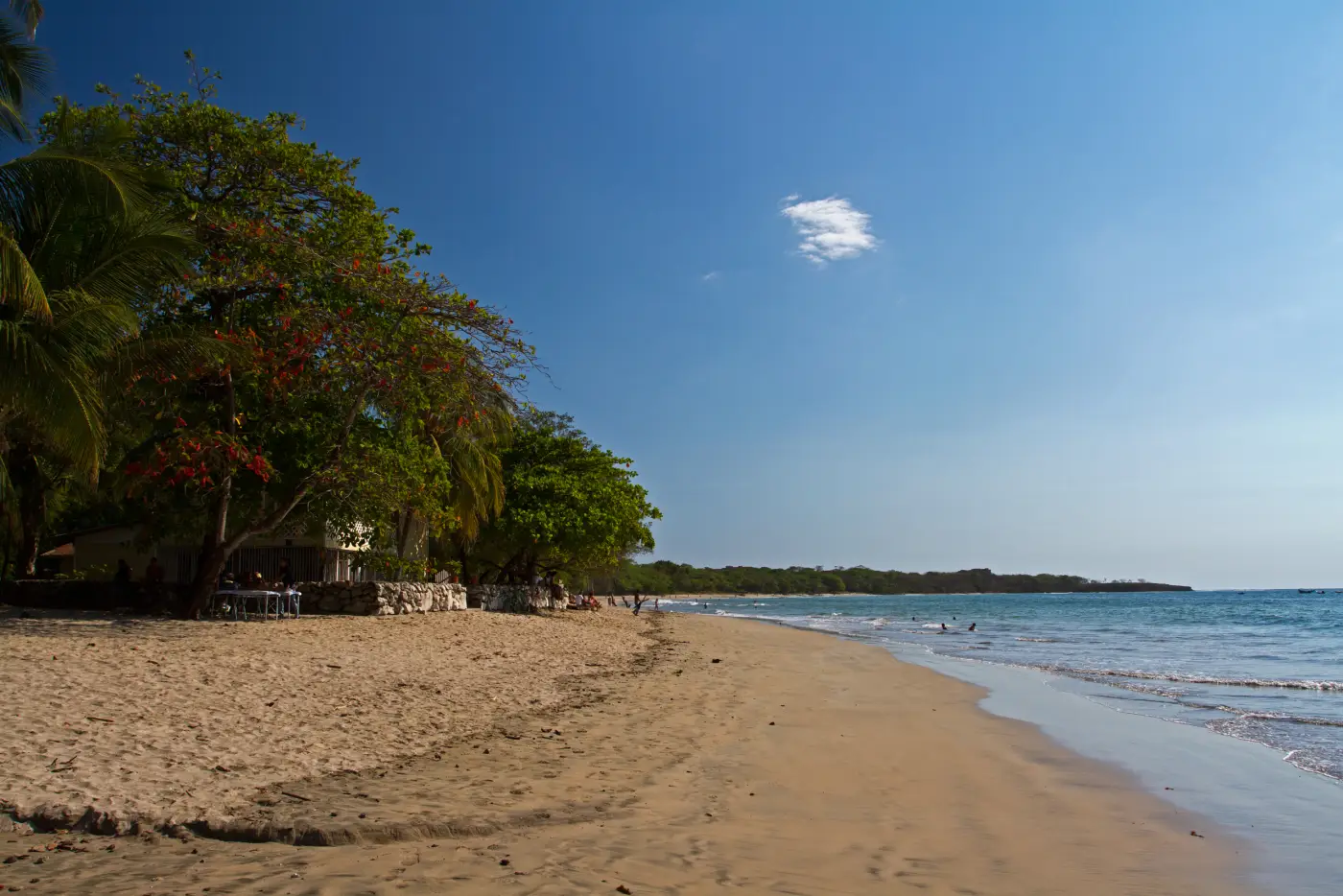
Hero photo: Jarle Naustvik / Wikimedia Commons (CC BY 2.0)
In this guide
Where Guanacaste is, and what it’s likeWhich airport to fly intoPick one beach base by travel styleDry season or green season?Money: colones, dollars, cards and tippingEntry basics (check the official rules)Getting around: car, transfer or tour pickupWhat to book before you flySafety, in proportionOcean, sun and waterFirst-trip checklistFrequently asked questionsFor a first trip to Guanacaste, fly into Liberia (LIR), stay in one beach base that suits how you like to travel, and plan around the seasons: December to March is dry, and the rains run from May to November. Before you fly, book your arrival transport, any national park tickets (Rincón de la Vieja and Río Celeste sell them online only) and the tours you care most about. On the ground, cards and US dollars both work, driving is best done in daylight, and the ocean deserves real respect.
Your first trip, in short
Airport: Liberia (LIR), about 30 minutes to 3 hours from the main beach towns. Base: Coco or Hermosa for the shortest transfer, Tamarindo for a busy town with surf lessons, Flamingo for a quieter hotel stay, Sámara or Nosara for the Nicoya Peninsula. Weather: dry December–March, green May–November. Money: colones, US dollars and cards. Book ahead: transfer, SINAC park tickets, popular tours. Beach safety: rip currents are common and many beaches have no lifeguards.
Where Guanacaste is, and what it’s like
Guanacaste is Costa Rica’s northwest corner. Its tourism area runs down the Pacific coast from the Nicaraguan border to the Bongo River estuary on the Nicoya Peninsula. It’s the driest region in the country, known for cattle ranches, beaches and tropical dry forest — Santa Rosa National Park in the north protects some of the best of it. Inland, the Rincón de la Vieja, Miravalles, Orosi and Tenorio volcanoes line the Guanacaste mountain range.
Tourism clusters around a few places. Visit Costa Rica names Liberia, Santa Cruz and Nicoya as the commercial centers, and Papagayo, El Coco, Flamingo, Conchal, Tamarindo and Sámara as the main beach areas.
Which airport to fly into
If your trip is mostly beaches, fly into Liberia (LIR), officially Guanacaste Airport. It sits about 12 km west of downtown Liberia on Route 21, and the main beach towns are roughly 30 minutes (Playas del Coco) to 3 hours (Nosara) away. San José (SJO) is about four hours’ drive from Liberia before you even reach the coast. Our LIR vs. SJO guide compares both destination by destination, and if you’ve already booked San José, see how to get from SJO to Guanacaste.
Rental car agencies are inside the airport, and the airport recommends using only authorized transportation, identified by official credentials and company uniforms. The simplest arrival is a transfer booked in advance — see our Liberia airport transfers.
Pick one beach base by travel style
On a first trip of five days or fewer, choose one base and do day trips from it; changing hotels eats into your holiday. Pick by the kind of evenings you want and how long a drive you’ll accept after your flight.
Approximate drive times from Liberia airport. Real times depend on traffic, weather and your exact hotel.
Base
Suits
From LIR
The shortest transfer; Coco is one of the region’s liveliest beach towns
About 30–45 min
First-timers who want restaurants, nightlife, hotels for every budget and surf lessons
About 1–1½ hr
A quieter stay with good hotels; catamaran sails leave from Flamingo
About 1–1½ hr
For a feel of the busiest base, read our guide to things to do in Tamarindo. Private transfers run from the airport to Tamarindo, Flamingo and Conchal and Papagayo and Coco. If you have a week, our how many days in Guanacaste guide shows how to split it between two bases.
Dry season or green season?
December to March is dry — Visit Costa Rica’s climate summary puts only 4% of the region’s annual rain in those months, with April as a transition. May to November is the green season, with a drier spell (the *veranillo*) in July and August. The dry months are also high season: hotels, parks and tours get busy from late December and around Semana Santa (Easter week). Our guide to the best time to visit Guanacaste covers the trade-offs.
Money: colones, dollars, cards and tipping
Currency: the Costa Rican colón (₡). US dollars and major credit cards are widely accepted.
Cash: there are ATMs throughout the country, including at Guanacaste Airport, but some close overnight (roughly 11pm–5am). Use machines in busy, well-lit places and keep an eye on your card statements.
Changing money: use banks or authorized exchange offices. Banks ask for your original passport, not a copy.
Tax and tipping: prices include 13% VAT, and restaurant and hotel bills already include a 10% service charge. Leaving extra for exceptional service is welcome but optional.
Departure tax: US$29, included in most airline tickets.
Entry basics (check the official rules)
Entry rules depend on your nationality and can change, so use this as a checklist, not legal advice. Confirm the details on Visit Costa Rica’s entry requirements page and your own government’s travel advice before you fly.
Passport and visa: bring a valid, machine-readable passport. Citizens of the US, Canada and most European countries don’t need a visa for a tourist visit, and the immigration officer decides how many days you get.
At immigration: have your return or onward ticket and the address of your first night’s stay ready — officers can ask for both.
While you’re there: carry ID (a copy of your passport showing the entry stamp is usually accepted), and don’t take home shells or wildlife — you can be fined.
Getting around: car, transfer or tour pickup
If you stay in one base and book tours that include hotel pickup, you can manage without a car. If you want to hop between beaches on your own schedule, rent one. Our getting around Guanacaste guide compares the options, and you can compare rental cars on our site.
Licence: Visit Costa Rica says a valid licence from home lets you drive for three months without an international permit. The UK government notes old paper UK licences may need one — check with your rental company.
Insurance: third-party liability cover is required by law on rentals and still applies if your credit card covers collision damage, so include it when comparing quotes.
Daylight: sunset is around 5:15pm in November and 6:10pm in July. Plan longer drives to finish before dark.
Rainy season: heavy rain can cause potholes and landslides, and even shallow water at a river crossing can destabilize a car.
Parking and breakdowns: don’t leave luggage or valuables in a parked car, even in the trunk. With a flat tire, avoid stopping somewhere isolated, don’t accept help from strangers, and call your rental company or 911.
What to book before you fly
Your arrival transfer or rental car, so you aren’t sorting it out after a long flight.
National park tickets. Rincón de la Vieja and Río Celeste (Tenorio Volcano National Park) sell entry only online, through SINAC’s booking site. At Rincón de la Vieja, the listed non-resident adult fee is $16.95, and the main Las Pailas sector is closed on Mondays. Our Rincón de la Vieja guide explains the park and the private ranches next to it.
A volcano day with the logistics handled. The Rincón de la Vieja volcano hike, waterfall and hot springs combo includes national park fees, lunch and hotel pickup from listed areas, from $125 per person (minimum two people per booking).
A day on the water. The sunset catamaran and snorkeling tour from Playa Flamingo includes snorkel gear, kayaks, snacks and drinks, from $95 per person. Compare others in our best catamaran tours in Guanacaste roundup.
Something easy for day one. A 90-minute surf lesson in Tamarindo starts from $69 per person (it doesn’t offer free cancellation), and the two-hour Tamarindo estuary boat safari through the mangroves of Las Baulas National Park starts from $52 per person.
Prices and busy dates
Tour prices are the “from” prices listed on our site in September 2026 and change — check the tour page for today’s price, pickup areas and cancellation terms. Book early for late December and Easter week, when Visit Costa Rica says parks and tours get busy.
Safety, in proportion
The US State Department rates Costa Rica Level 2: exercise increased caution, because of crime; the US Embassy notes that most visitors travel safely. The advice from the US Embassy and the UK government mostly comes down to everyday habits:
Watch your things on the beach, and don’t leave valuables unattended while you swim.
Use ATMs in busy, well-lit places, and avoid walking alone on poorly lit beaches or streets at night.
Keep an eye on your drink, and avoid cheap or unregulated spirits — the UK government reports deaths from methanol-tainted alcohol.
Use official taxis or reputable ride-hailing apps.
Get travel insurance that covers your activities; the UK government notes zip-lining, surfing and quad biking are often excluded from standard policies.
Save 911, Costa Rica’s emergency number.
Advisories change, so check travel.state.gov or GOV.UK’s Costa Rica advice shortly before your trip.
Ocean, sun and water
Respect the rip currents
The UK government says rip currents are very common in Costa Rica and there are often no lifeguards. The US Embassy adds that most beaches have no lifeguards or warning signs, and advises that if there are no lifeguards, signs or flags, you shouldn’t go in. Don’t swim alone, at night or after drinking, and ask your hotel about local conditions.
If a rip current catches you, the US National Weather Service advice is: relax — it pulls you away from shore, not under; don’t swim against it; swim parallel to the shore until you’re free, then angle back in. If you can’t get out, face the shore and wave or call for help.
Surfing: beginners should stay with a qualified instructor. Some beaches have crocodiles, so ask locally before you paddle out.
Sun: use reef-safe sunscreen, as Visit Costa Rica recommends.
Tap water: drinkable in most of the country; Visit Costa Rica suggests bottled water only in a few rural areas.
Boat and snorkel trips: safety standards on small boats vary, so book an established operator.
First-trip checklist
1.
Passport checked against the entry rules for your nationality, plus a return or onward ticket.
2.
The address of your first night’s accommodation, saved offline.
3.
Arrival transfer or rental car booked, with mandatory liability insurance in your budget.
4.
SINAC tickets bought online for any national park day.
5.
Must-do tours booked, after checking pickup areas and cancellation terms.
6.
Travel insurance that covers the activities you plan to do.
7.
A card that works abroad, plus some cash.
8.
A navigation app, with a roaming plan or a local prepaid SIM (Kolbi, Claro or Movistar).
9.
Reef-safe sunscreen, closed shoes for volcano trails and a light rain layer from May to November.
10.
911 saved in your phone.
Browse Guanacaste tours
Volcano, catamaran, wildlife and surf tours across Guanacaste — each tour page shows current prices, pickup areas and cancellation terms.
Frequently asked questions
Is Guanacaste a good choice for a first trip to Costa Rica?
For a beach-focused trip, yes: it’s the country’s driest region, Liberia airport is close to the main beach towns, and places like Tamarindo have plenty of hotels, restaurants and tours. If you also want the Central Valley or the Caribbean, compare airports in our LIR vs. SJO guide.
Should I pay in colones or US dollars?
Either works. The colón is the local currency, and US dollars and major credit cards are widely accepted. Restaurant and hotel bills already include a 10% service charge.
Can I buy national park tickets at the entrance?
Not at Rincón de la Vieja or Río Celeste — both sell tickets only online through SINAC. Buy them before you go, or book a tour that includes park fees.
Do I need a car in Guanacaste?
Not if you stay in one base and book tours with hotel pickup. A car makes sense if you want to explore several beaches; budget for the mandatory liability insurance.
Is Guanacaste safe for tourists?
The US State Department rates Costa Rica Level 2 (exercise increased caution) because of crime, and the US Embassy notes most visitors travel safely. Watch your belongings, don’t leave anything in a parked car, and take rip currents seriously — many beaches have no lifeguards.
When is the best time for a first visit?
December to March for the most reliable dry weather; the green season (May to November) brings lighter crowds and more rain. See our guide to the best time to visit Guanacaste.
Sources
Facts in this guide were checked against these references on the dates shown.
Visit Costa Rica (ICT) — Guanacaste province — Guanacaste is Costa Rica’s driest region, known for cattle ranches and beaches; Coco Beach is popular for its nightlife; Flamingo offers good hotels and a quiet atmosphere; Santa Rosa National Park is a jewel of tropical dry forest; the Tenorio, Orosi, Miravalles and Rincón de la Vieja volcanoes sit in the Guanacaste range. (accessed 15 September 2026)
Visit Costa Rica (ICT) — Guanacaste region — The tourism area runs along the Pacific coast from the Nicaraguan border to the Bongo River estuary; Liberia, Santa Cruz and Nicoya as commercial centers and Papagayo, El Coco, Flamingo, Conchal, Tamarindo and Sámara as tourism centers; Tamarindo’s restaurants, hotels for all budgets, nightlife and surf; Sámara’s 4 km bay with gentle waves; Nosara and Guiones’ strong surf and yoga scene. (accessed 15 September 2026)
Visit Costa Rica (ICT) — Weather in the Guanacaste region — Guanacaste is in the country’s northwest; the dry period runs December–March with 4% of annual rain, April is a transition, rains run May–August with a July–August veranillo, and a second rainy period runs September–November. (accessed 15 September 2026)
Visit Costa Rica (ICT) — When to visit — The dry high season runs from mid-December to late April; hotels, national parks and outdoor attractions get busy in late December; Semana Santa draws crowds; crowds are lighter in the green season. (accessed 15 September 2026)
Visit Costa Rica (ICT) — Travel and safety tips — Colón currency; US dollars and major cards widely accepted; exchange only at banks and approved offices; banks require an original passport; ATMs nationwide, some closed 11pm–5am; 13% VAT and a 10% tip included in restaurant and hotel prices; US$29 departure tax usually included in airfares; tap water drinkable in most areas; prepaid SIMs from Kolbi, Claro and Movistar; dial 911; use a navigation app, don’t leave valuables in the car and don’t accept unsolicited help with a flat tire; some beaches have crocodiles, so ask before surfing. (accessed 15 September 2026)
Visit Costa Rica (ICT) — Frequently asked questions — Citizens of the USA, Canada and most European countries can visit without a visa; a legal driver’s licence can be used for three months without an international licence; beach safety advice (don’t swim alone, heed warning flags, use reef-safe sunscreen, beginner surfers should use a qualified instructor). (accessed 15 September 2026)
Visit Costa Rica (ICT) — Entry requirements — Entry requires a valid, machine-readable passport, a return or onward ticket and possibly proof of funds (US$100 per month of stay); the immigration officer sets the length of stay by country group (up to 180 days for the first group); carry a copy of your passport with the entry stamp. (accessed 15 September 2026)
GOV.UK — Costa Rica travel advice: entry requirements (updated 19 May 2026) — UK passports must be valid for at least one day after departure; visa-free stays of up to 180 days at the officer’s discretion; US$29 departure tax usually in ticket prices; yellow fever certificate only from at-risk countries; fines for removing wildlife, including seashells. (accessed 15 September 2026)
GOV.UK — Costa Rica travel advice: safety and security (updated 19 May 2026) — Watch valuables on the beach and don’t leave luggage in parked cars; drink spiking and methanol in cheap spirits; carry ID (a printed copy is usually accepted); rip currents are very common and there are often no lifeguards; small-boat and adventure safety standards vary; adventure activities are often excluded from standard insurance; UK photocard licences valid up to 180 days, paper licences may need an IDP; rainy-season potholes and landslides. (accessed 15 September 2026)
U.S. Embassy in Costa Rica — Spring Break 2026: Travel Smart, Be Informed (27 March 2026) — Travel Advisory Level 2: exercise increased caution due to crime; most visitors travel safely; most beaches have no lifeguards or warning signs and you shouldn’t enter the water without lifeguards, signs or flags; use ATMs in well-lit areas, official taxis or reputable ride-sharing apps, watch drinks and avoid unregulated alcohol; take care at river crossings; get travel insurance; dial 911. (accessed 15 September 2026)
The Tico Times — U.S. State Department keeps Costa Rica travel warning (10 April 2026) — The State Department reissued its Level 2 advisory for Costa Rica on 2 April 2026, citing crime. (accessed 15 September 2026)
U.S. National Weather Service — Surviving a rip current — If caught in a rip current: relax, don’t swim against it, swim parallel to shore, and face the shore and call or wave for help if you can’t get out. (accessed 15 September 2026)
Guanacaste Airport (LIR) — Location — The airport is about 12 km west of downtown Liberia on Route 21. (accessed 15 September 2026)
Guanacaste Airport (LIR) — Transportation, car rentals and immigration pages — Use only authorized transportation, identified by credentials and uniforms; rental agencies are located inside the airport; have your passport, accommodation address and onward ticket ready for immigration; the airport has ATMs and currency exchange. (accessed 15 September 2026)
Two Weeks in Costa Rica — Nosara trip planning essentials (updated September 2025) — About 2½ hours from LIR to Nosara via Nicoya and Route 150, ending on rough dirt and pavement. (accessed 15 September 2026)
Two Weeks in Costa Rica — Guanacaste regional snapshot (updated September 2025) — Nosara is about 3 hours from LIR; Sámara about 2 hours. (accessed 15 September 2026)
Vamos Rent-A-Car — Liberia Airport driving routes — Approximate drive times from LIR: about 30 minutes (30–60 minutes in its route detail) to Coco and Hermosa; about 1.5 hours (1–2 hours in its route detail) to Tamarindo, Flamingo and Conchal. (accessed 15 September 2026)
Vamos Rent-A-Car — Car rental insurance explained — Third-party liability (TPL/SLI) cover is required on rentals in Costa Rica and remains mandatory even when a credit card’s collision cover is used. (accessed 15 September 2026)
Adobe Rent a Car — Liberia to San José — About 215 km and roughly four hours by car between San José and Liberia. (accessed 15 September 2026)
SINAC — Parque Nacional Rincón de la Vieja — Tickets are sold only through SINAC’s online system; non-resident adult fee of $16.95 including VAT; Las Pailas sector open Tuesday–Sunday and closed Mondays. (accessed 15 September 2026)
SINAC — Parque Nacional Volcán Tenorio (Río Celeste) — Río Celeste entry tickets are sold only through SINAC’s official website. (accessed 15 September 2026)
Sunrise-Sunset.org API — Liberia, Costa Rica (2026) — Sunset at about 5:17pm in mid-November and about 6:10pm in early July. (accessed 15 September 2026)
Guanacaste Experiences tour catalog (lib/tours.ts, synced from Viator) — Listed “from” prices, durations, inclusions, pickup areas and cancellation terms for the four tours linked in this guide. (accessed 15 September 2026)
Plan this trip
Browse the tours that fit what you’ve just read — real operators, real prices, book direct.
Browse Guanacaste tours
Related experiences


Guanacaste Experiences
An independent guide to the best tours and excursions in Guanacaste, Costa Rica.
Guanacaste Experiences is an independent guide. We do not operate tours ourselves — bookings are completed by trusted partners such as GetYourGuide and Viator, each with their own secure checkout and cancellation terms. We may earn a commission when you book through our links, at no extra cost to you.
© 2026 Guanacaste Experiences. All rights reserved.