Practical
Is Tamarindo Safe? An Honest Guide for Visitors
Guanacaste Experiences editorial team
·
18 October 2026
·
11 min read
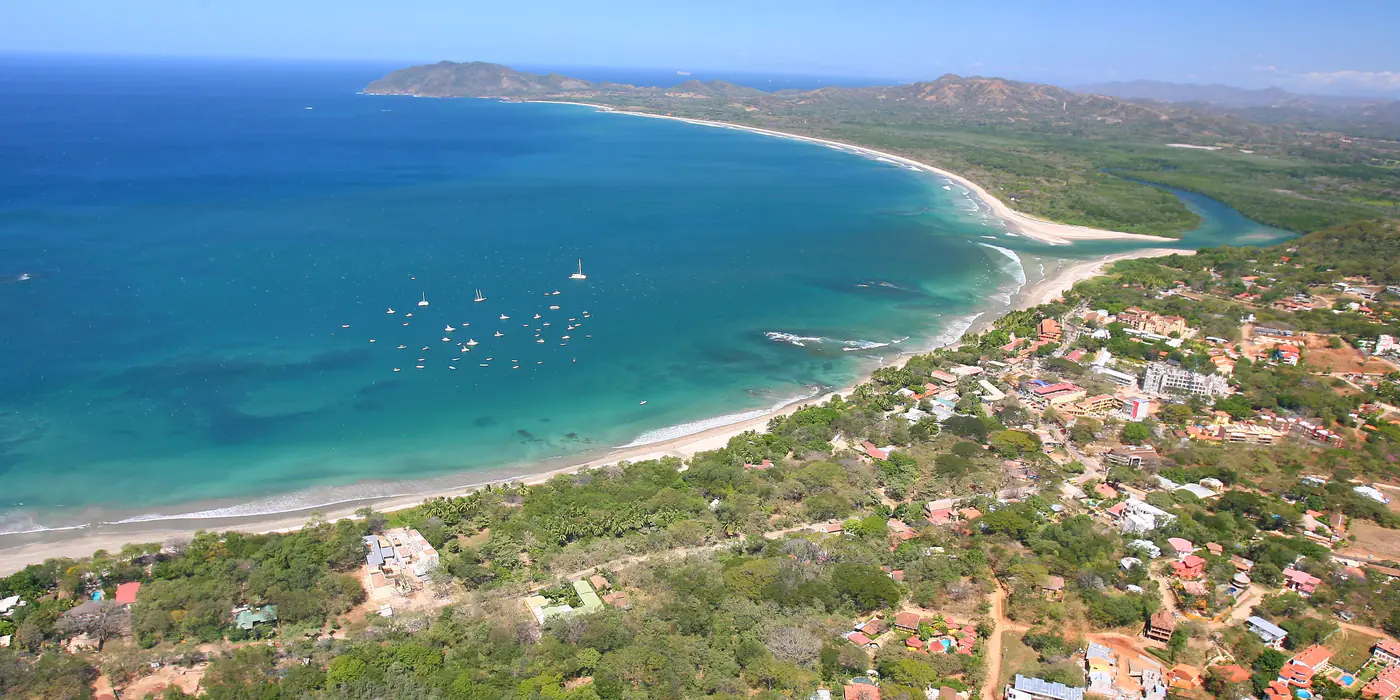
Hero photo: Tamarindowiki / Wikimedia Commons (CC BY-SA 3.0)
In this guide
What the governments sayThe ocean is the real risk, and Tamarindo is better placed than mostThe estuary and its crocodilesCrime, without euphemismNightlifeGetting aroundHealth: water, mosquitoes, sun and the nearest hospitalEarthquakes, tsunami signs, and what does not changeYes, for most visitors, most of the time, and the qualifications are where the useful information is. The two things most likely to hurt you in Tamarindo are the sea and the road. The thing most people worry about, crime, is real, has grown since 2025, and is also the risk that good habits do most to shrink. This guide takes each in turn, using the official sources and the local record rather than reassurance.
It is about the town itself. The province-wide drowning figures, and why the calm-looking days deserve the most respect, are in our data-led guide to safety in Guanacaste.
What the governments say
No government we checked advises against travel to any part of Costa Rica. Canada asks its citizens to “exercise a high degree of caution” because of crime, and the US State Department’s country page says that “violent crime, including armed robbery, homicide, and sexual assault, also affects tourists.” Those pages change several times a year, so rather than quote a risk level that may have moved by the time you read this, check them the week you fly: the UK Foreign Office, Canada, the US State Department, and the CDC for health notices. They are the only part of this subject that genuinely goes out of date.
The ocean is the real risk, and Tamarindo is better placed than most
The UK Foreign Office puts it plainly: “rip currents are very common and there are often no lifeguards”, and drownings “have averaged 50 to 60 per year, a third of whom were tourists.” The US Embassy adds that “Most beaches do not have lifeguards or warnings about unsafe conditions.”
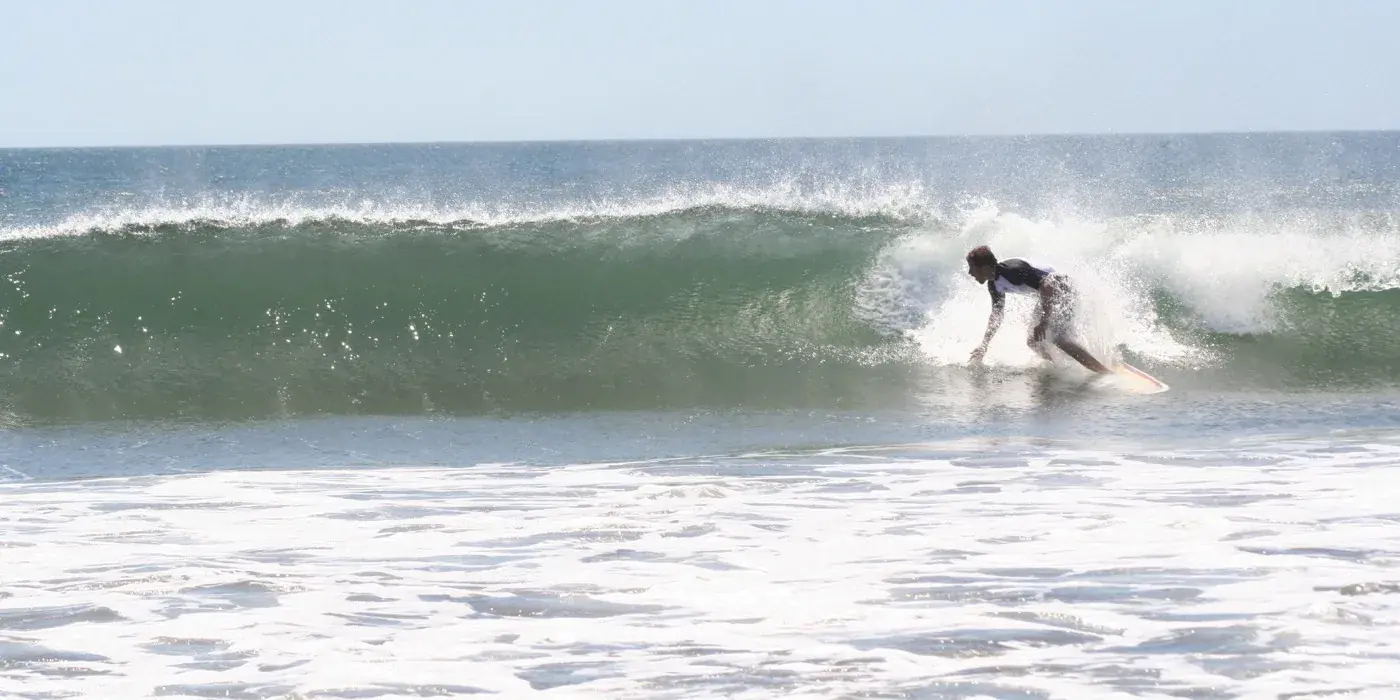
Tamarindo is the exception. The community development association started a lifeguard programme on the main beach in 2015, the Municipality of Santa Cruz put up a tower in 2019, and the Tourism Institute and the Red Cross fund two guards under an agreement that covers only a handful of beaches nationally. La Voz de Guanacaste reported in 2021 that “since the project was implemented in 2015, Tamarindo hasn’t recorded deaths from drowning. Last year, just one was recorded.”
That is a record, not a guarantee. The guards cover the main beach by day, nine to six in the programme’s own description, and the cover is partial: en ciertos puntos, at certain points, as the Costa Rican press put it after a 55-year-old American visitor drowned here in April 2026. Playa Langosta has no public lifeguards that we could verify. Playa Grande has volunteers who patrol on Sundays.
Read the flags
Green, swimming allowed. Yellow, swim with caution. Red, swimming prohibited. Red and yellow together mark the patrolled area where it is safe to swim. Black, electrical storm. Swim between the red-and-yellow flags while they are up; once the guards go home, this beach is unguarded like every other in the province.
The official beach atlas, published by the Tourism Institute with the Universidad Nacional, calls most beaches in Tamarindo’s sector relatively dangerous for rip currents because of their exposure, and names Playa Grande among the most dangerous in the area. Its most useful line is the counter-intuitive one: es más seguro nadar en zonas donde las olas rompen con toda su intensidad. It is safer to swim where the waves break at full strength, because the stretches where the surf is weaker or absent are, in its words, almost certainly where the rip currents are. The gap in the whitewater is the channel, not the safe spot.
That is also why a beach-level verdict is of little use. Rips sit where the sandbars and rock shelves put them, and the dangerous channel and the safe sandbar can be a couple of hundred metres apart on the same morning. Ask the lifeguard where to go in, and if you are learning to surf, let an instructor choose the spot. Knowing where to put you today is much of what you are paying for.
The estuary and its crocodiles
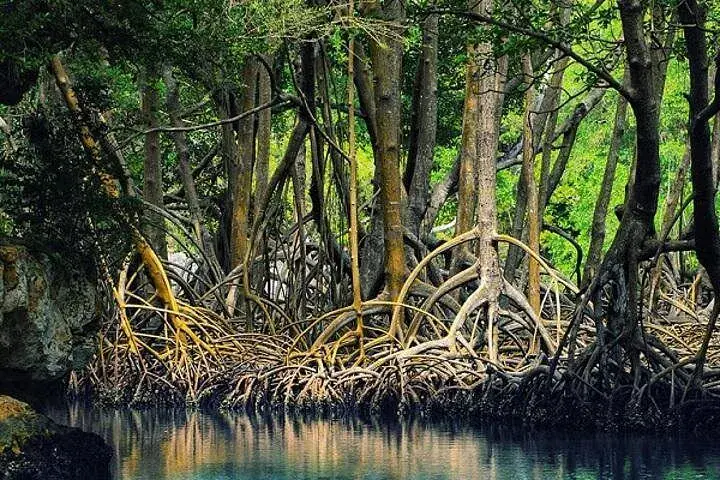
At the north end of the beach the estuary opens into the bay, with Playa Grande on the far bank. It is mangrove inside Las Baulas National Marine Park, and American crocodiles live in it. In July 2016 an American tourist “had his right leg amputated” after “a crocodile attacked him near the Playa Grande estuary”, in what The Tico Times called “the third and most severe attack on a surfer near the estuary in the last three years.” Officials captured and relocated the animal that October, and the regional conservation coordinator was blunt about why it happened: “The illegal feeding of wild animals is what caused this individual (the crocodile) to do what it did.”
Nothing comparable has been reported since, and the wildlife service describes a national “repopulation of the species”, not an overpopulation. The rules are simple. Cross to Playa Grande by boat and never wade or swim the channel, however shallow it looks at low tide; the crocodiles still cross between the two beaches on the currents. Do not feed anything, anywhere: it is an offence under the Wildlife Conservation Law, and it was the root of the one serious attack. To see the crocodiles, take the estuary boat tour, from a seat.
Crime, without euphemism
Here is the part most guides soften. Santa Cruz, the canton Tamarindo belongs to, was the only one of Guanacaste’s eleven to record more homicides in 2025, rising from 12 to 23, and La Voz de Guanacaste traced ten of the eleven new cases to the coastal districts of Tempate, Tamarindo, Veintisiete de Abril and Cabo Velas. The run continued into 2026 with a series of early-morning shootings in Tamarindo and Villarreal. Nationally, 2025 closed with a homicide rate of 16.7 per 100,000, the third-worst year on record.
Most of that violence is between people in the drug trade, at three and four in the morning. Not all of it. In July 2025 a Canadian visitor was shot dead at the house he had rented in Los Jobos, a day into his trip, in what police called an attempted robbery, and that November the US Embassy warned that “Tourists have reported break-ins and armed robberies at Airbnbs and other rental properties”, some of them forced to withdraw cash at ATMs. The investigative police counted around 900 assaults on foreign tourists nationwide in 2025 and said that in coastal towns criminals profile foreigners in advance.
The everyday pattern is less dramatic and far more common. The police’s own phrase for the number-one offence in Santa Cruz is hurto por descuido, theft by carelessness, and the beaches most affected are Playa Grande, Tamarindo, Flamingo and Junquillal. Cars are the other setting: thieves jam key-fob signals so that doors never lock, which is why Canada’s advice is to “always manually check that the doors are locked”, and the Foreign Office records the tyre trick, in which “thieves slash a tyre and then offer to help change it, while an accomplice steals from the car.”
What to do follows directly. Nothing stays in the car, not in the boot, not for five minutes. On the beach, someone stays with the bags, or the bags stay home. For the rental, choose a place with neighbours over an isolated villa, ask the host what security it has, lock up, use the safe, keep cash small, and do not open the door to anyone unexpected at night. After dark, stay on the lit streets and take taxis; the official advice to “avoid walking alone in poorly lit or remote areas at night” means, here, the beach and the roads out of town.
The town is not undefended. Tamarindo got its first permanent police station in January 2021, the tourist police sent a task force in 2023, and the community association funds motorised patrols and thirty monitored cameras. If something happens, call 911 and ask for the tourist police, who can help you start the formal report, the denuncia, that your insurer will ask for.
Nightlife
Two official warnings apply to the bar scene directly. The Foreign Office: “Rapes and sexual assaults have increased, some of which appear targeted toward tourists. Avoid leaving drinks unattended in bars as there have been reports of ‘spiked’ drinks resulting in assault and theft.” Canada widens it to “snacks, beverages, gum and cigarettes”. And on what is in the glass, the Foreign Office records “deaths and cases of serious illness caused by alcoholic drinks containing methanol in Costa Rica”, used by criminal gangs in “cheap brands of local spirits, including vodka and ‘guaro’”. Beer, wine and a branded bottle poured in front of you are not the problem. Unlabelled spirits and very cheap cocktails are.
Drugs will be offered to you on the beach. Possession for personal use is not prosecuted when the quantity is small, but the law sets no permitted amount, marijuana is illegal, and selling, carrying or transporting drugs carries eight to fifteen years. The Foreign Office’s summary is enough: “Do not get involved with drugs of any kind.”
Getting around
Driving here is ordinary by day and a different proposition at night. Canada’s advice is to “avoid travel at night”, and its reason fits in one line: “Motorists often drive without lights at night.” Add unlit roads without verges, cyclists, dogs and the occasional horse, and the most avoidable risk of the trip is arriving after dark in a car you collected an hour earlier. Our first-day guide from Liberia airport is built around sunset for that reason, and the car rental guide covers the rest.
In the rainy season the State Department notes that flooding is common and that Guanacaste is among the provinces most affected; the November 2024 rains damaged a hundred homes around Tamarindo, and it is the unpaved side roads out of town that change after a storm. For taxis, official cars are red with a yellow triangle on the door, orange at the airport. The Foreign Office advises against “unofficial taxis (‘taxi piratas’)” and recommends radio-dispatched ones, which is what your hotel or restaurant will call. Ride-hailing apps operate in Costa Rica without a law behind them, and the bill to regulate them had still not been voted on in October 2026, so do not plan a trip around them.
Health: water, mosquitoes, sun and the nearest hospital
Costa Rican tap water is generally drinkable, with potable supply reaching 92.4% of the population according to the State of the Nation report, but the coast is where that generalisation frays: the rural water boards around Tamarindo and Tempate face shortages in dry El Niño years. Ask where you are staying whether the tap is drinkable. If the answer is a shrug, bottled water is cheap.
Dengue is endemic and year-round, and there is no malaria risk here: the CDC lists transmission only in Alajuela and Limón. Chikungunya, absent since 2017, returned in 2026 with an outbreak first identified at Playa Langosta on 1 July, which is why the CDC posted a notice for north-western Costa Rica. Outbreaks come and go; the advice does not. Repellent at dawn and dusk, and a doctor for any fever within a fortnight of the trip. The sun at ten degrees north is not negotiable either: shade between 10 a.m. and 4 p.m., a high-factor sunscreen, and the CDC’s reminder that “heat-related illness, such as heat stroke, can be deadly.”
For care the picture is better than most beach towns. Two private 24-hour facilities sit ten minutes inland in Huacas: BeachSide Clinic, open round the clock since 2013 with its own ambulances, and Hospital Metropolitano’s Huacas branch, next to the fire station. The public regional hospital is the Enrique Baltodano in Liberia, about an hour away, and Clínica Bíblica runs a private 24-hour hospital in Liberia too. CIMA Guanacaste, still on some lists, closed in 2018. Carry insurance, because, as the Foreign Office notes, “Only initial emergency medical treatment is available without charge for visitors. Subsequent treatment will be charged.” Foreign prescriptions are not accepted, so bring what you need.
Earthquakes, tsunami signs, and what does not change
Costa Rica is seismically active, and Tamarindo has done its homework: in February 2021 it was recognised as Tsunami Ready under the UNESCO programme, with evacuation-route signs around town. If the ground shakes so hard that you cannot stand, do not wait for a siren. Walk inland and uphill along the signed route.
Everything else in this guide that can go out of date sits in the official pages linked above, and we review it on a schedule. What does not change is the shape of the place: an open Pacific beach with rip channels, a river mouth with crocodiles, roads without lights, a tropical sun, and a thief who wants whatever you left in the car. Tamarindo asks for the habits of a sensible adult, not courage. With those, it remains one of the better-watched places on this coast to spend a week, and the things-to-do guide and the Tamarindo destination page are where to start planning it.
Is Tamarindo safe for tourists?
For most visitors, yes. No government advises against travel to Costa Rica. The risks that usually materialise are the sea, the road, and theft from cars and beaches. Violent crime rose in the Tamarindo area in 2025 and 2026, mostly between people in the drug trade at night, and one tourist was killed in a rental-house robbery in July 2025, which is why rental security now matters as much as beach habits.
Does Tamarindo beach have lifeguards?
Yes, on the main beach by day, through a community programme funded by the Tourism Institute and the Red Cross. Swim between the red-and-yellow flags and treat the beach as unguarded once they come down. Langosta has no public lifeguards we could verify.
Are there crocodiles in Tamarindo?
Yes, in the estuary at the north end of the beach, inside Las Baulas National Marine Park. A tourist lost a leg to one in 2016 after the animal had been fed illegally. Cross to Playa Grande by boat, never wade the channel, and never feed wildlife.
Where is the nearest hospital to Tamarindo?
Two private 24-hour clinics in Huacas, ten minutes away: BeachSide Clinic and Hospital Metropolitano. The public regional hospital is the Enrique Baltodano in Liberia, about an hour by road. Dial 911 in an emergency.
Sources
Facts in this guide were checked against these references on the dates shown.
GOV.UK — Costa Rica travel advice: safety and security (UK Foreign, Commonwealth & Development Office) — Advises against travel to no part of Costa Rica (summary page “Still current at: 18 October 2026”, updated 19 May 2026). Verbatim: “rip currents are very common and there are often no lifeguards”; “Drownings are the second most common cause of accidental death and in recent years have averaged 50 to 60 per year, a third of whom were tourists”; “thieves slash a tyre and then offer to help change it, while an accomplice steals from the car”; “Avoid walking alone in poorly lit or remote areas at night”; “Rapes and sexual assaults have increased, some of which appear targeted toward tourists. Avoid leaving drinks unattended in bars as there have been reports of ‘spiked’ drinks resulting in assault and theft”; “There have been deaths and cases of serious illness caused by alcoholic drinks containing methanol in Costa Rica. Criminal gangs have apparently used methanol in the manufacture of cheap brands of local spirits, including vodka and ‘guaro’”; “Do not get involved with drugs of any kind”; “Avoid using unofficial taxis (‘taxi piratas’). Official taxis are red (or orange at the airport) with a triangular sticker”; “Costa Rica is generally welcoming of LGBT+ travellers”; “Women travelling alone have reported having to pay extra attention to their personal safety”. (accessed 18 October 2026)
GOV.UK — Costa Rica travel advice: health (FCDO) — “Medical care in Costa Rica is of a generally high standard. Ambulance services in remote areas may vary. Only initial emergency medical treatment is available without charge for visitors. Subsequent treatment will be charged.” Also: “Prescriptions from the UK cannot be used locally.” (accessed 18 October 2026)
Government of Canada — Costa Rica travel advice and advisories — Risk level “Exercise a high degree of caution” (last updated 14 October 2026). Verbatim: “Car break-ins and theft are very common throughout the country. Rental and luxury vehicles are a target of choice”; theft “commonly occurs in the parking lots of: hotels, supermarkets, restaurants, stores, national parks, beaches”; “always manually check that the doors are locked since ‘key jamming’” is used; “Riptides are common. Several drownings occur each year. Very few beaches are supervised by lifeguards”; “Snacks, beverages, gum and cigarettes may contain drugs that could put you at risk of sexual assault and robbery”; “Motorists often drive without lights at night”; “avoid travel at night”; rainy-season hazards “potholes, sharp curves, lack of traffic signs, landslides, narrow or unpaved roads”; “Official taxis are safe. They are orange at the airport and red with a yellow triangle on the side elsewhere”; “In case of an emergency, dial 911.” (accessed 18 October 2026)
US Department of State — Costa Rica country information page (Internet Archive capture of 4 August 2025; page dated “Last Updated: April 4, 2025”) — The live page sits behind a bot-detection wall that also blocks the Internet Archive’s 2026 captures, so the most recent readable capture is cited. Verbatim: “Violent crime, including armed robbery, homicide, and sexual assault, also affects tourists”; “Never leave valuables unattended on the beach or in an unlocked room”; “Even a locked car in a parking area can be a target”; “thieves can block key fobs with jammers”; “People have reported robberies at isolated rental properties”; “Try not to drive outside of urban areas at night”; “Flooding is common in the rainy season (April to October). The most affected provinces are Limon, Puntarenas, and Guanacaste”; “Marijuana and marijuana-related products are illegal in Costa Rica”; “Use only licensed taxis or well-known ride-sharing services”; the Tourist Police can provide limited assistance to start a report at “Tamarindo Beach”. (accessed 18 October 2026)
US Embassy San José — Aquatic safety — “Rip currents in Costa Rica are very dangerous and are responsible for multiple drownings each year.” and “Most beaches do not have lifeguards or warnings about unsafe conditions.” (accessed 18 October 2026)
US Embassy San José — Security Alert, 25 November 2025 — “Tourists have reported break-ins and armed robberies at Airbnbs and other rental properties”, in some cases “forcing them to withdraw large sums of cash from ATMs or to make bank transfers”; “Be vigilant when visiting banks or ATMs.” (accessed 18 October 2026)
CDC — Costa Rica traveler health page — Malaria: “Present in the provinces of Alajuela and Limón. Rare to no transmission in other parts of the country.” Travel health notices listed on the page: Level 2 “Chikungunya in Costa Rica” (30 July 2026), Level 1 “Hepatitis A in Costa Rica” (18 September 2026), “Global Dengue”. Heat: “Heat-related illness, such as heat stroke, can be deadly”; seek shade between 10 a.m. and 4 p.m. (accessed 18 October 2026)
CDC — Travel Health Notice, Level 2: Chikungunya in Costa Rica — “There is an outbreak of chikungunya in northwest Costa Rica.” Notice dated 30 July 2026. (accessed 18 October 2026)
Teletica — “Salud detecta brote de chikungunya en Playa Langosta” (Ministerio de Salud) — Outbreak identified on 1 July 2026 at Playa Langosta, Santa Cruz de Guanacaste: “cuatro casos fueron confirmados por laboratorio y otros 17 se consideran probables”; “no se registraba circulación activa de este virus desde 2017”. Published 5 July 2026. (accessed 18 October 2026)
ICT & Universidad Nacional — Atlas de Playas de Costa Rica con énfasis en la seguridad (PDF, volume 1) — Pages 12–13 on recognising rip currents: “es más seguro nadar en zonas donde las olas rompen con toda su intensidad” and “las zonas de la playa donde el oleaje es menos intenso o hay menos rompientes, son zonas en las que casi con total seguridad hay corrientes de resaca”. Page 38, Map 4P (Bahía Potrero–Playa Tamarindo): “Las playas de este sector, en su mayoría son playas relativamente peligrosas por corrientes de resaca, debido a su apertura y exposición” and “Probablemente las playas más peligrosas de toda la zona sean Playa Grande, Ventanas, Madero y Nombre de Jesús”. Page 37: Tamarindo and Brasilito-Conchal bays “presentan un estero bien desarrollado”. Page 39, figure G-16: a handmade crocodile danger sign beside the Tamarindo estuary. (accessed 18 October 2026)
La Voz de Guanacaste — “Tamarindo and Sámara are the only beaches in Guanacaste with lifeguards. How did they do it?” — “in 2015, ADIT created the lifeguard program” (ADIT = Asociación de Desarrollo Integral de Tamarindo); the tower: “In Tamarindo, the Municipality of Santa Cruz installed it in 2019”; guards “financed by the Costa Rican Tourism Institute as part of an agreement with the Costa Rican Red Cross”; and “since the project was implemented in 2015, Tamarindo hasn’t recorded deaths from drowning. Last year, just one was recorded.” Published 11 February 2021. (accessed 18 October 2026)
La Voz de Guanacaste — “Tamarindo beach is now inclusive for color-blind people” — The flag code: “Green: Swimming allowed. Yellow: Swim with caution. Red: Swimming prohibited. Red and yellow: Safe swimming area. Black: Electrical storm.” And: “The Red Cross and ICT finance lifeguard teams on seven beaches in the country: Tamarindo in Guanacaste”. Published 3 November 2021. (accessed 18 October 2026)
The Tico Times — “Tamarindo lifeguard program saves lives despite lack of funding” — “From 9 a.m. to 6 p.m. every day of the week, the guards help in a variety of rescues”. Published 16 October 2015; hours treated as the programme’s description rather than a current timetable. (accessed 18 October 2026)
Teletica — “Extranjero de 55 años aparece ahogado en playa Tamarindo” — “Un hombre de nacionalidad estadounidense apareció ahogado la tarde del martes en playa Tamarindo, Guanacaste”. Published 22 April 2026. (accessed 18 October 2026)
Infobae — “Un turista estadounidense fallece arrastrado por la corriente en Costa Rica” — “la playa cuenta con presencia de guardavidas en ciertos puntos”; and, attributed to the Cruz Roja, that in 2026 “las emergencias por accidentes acuáticos en la zona del Pacífico guanacasteco se han triplicado”. Published 22 April 2026. (accessed 18 October 2026)
The Tico Times — “Crocodile destroys U.S. tourist’s leg near Tamarindo” (22 July 2016) — “A U.S. tourist had his right leg amputated Friday afternoon after a crocodile attacked him near the Playa Grande estuary”; “This is the third and most severe attack on a surfer near the estuary in the last three years”; “SINAC officials warned that the crocodiles tend to leave the estuary in the early morning and late afternoon.” (accessed 18 October 2026)
The Tico Times — “Tamarindo calls for relocation of crocodiles” (25 October 2016) — SINAC and Las Baulas park staff “captured and relocated the animal Oct. 16”; “the town has reported three crocodile attacks in the estuary since 2013.” (accessed 18 October 2026)
La Voz de Guanacaste — “Crocodile that scared Tamarindo tourists moved to Nicoya wildlife area” — The Tempisque Conservation Area coordinator: “The illegal feeding of wild animals is what caused this individual (the crocodile) to do what it did”. Published 25 October 2016. (accessed 18 October 2026)
La Voz de Guanacaste — “Is there an overpopulation of crocodiles in Costa Rica?” — SINAC: “there isn’t an overpopulation of crocodiles. Rather, what the country is going through is a repopulation of the species”; advice: “Don’t feed them. Don’t get into the water with them.” Published 8 November 2022. (accessed 18 October 2026)
The Tico Times — “Crocodiles share waves with surfers at Costa Rica’s popular breaks” — “Crocodiles cross between Tamarindo and Grande, using ocean currents”; “Feeding crocodiles, illegal here, worsens problems by drawing them to people”; “By 2025, no fatal surf-related attacks made headlines, but close calls persist.” Published 3 January 2026. (accessed 18 October 2026)
Delfino.cr — “APREFLOFAS llama a frenar la alimentación de animales silvestres” — Feeding wild animals is prohibited by the Ley de Conservación de la Vida Silvestre (N.º 7317), with “una multa de entre el 15% y el 30% de un salario base”. Published 27 October 2025. (accessed 18 October 2026)
La Voz de Guanacaste — “Five facts about the homicide crisis in Guanacaste” — OIJ data to 13 December 2025: “Santa Cruz was the only one of the province’s 11 cantons to record an increase in homicides, rising from 12 to 23 cases”, with the “coastal districts of Tempate, Tamarindo, Veintisiete de Abril, and Cabo Velas, which account for ten of the eleven new cases”. Published 17 December 2025. (accessed 18 October 2026)
CRHoy — “OIJ: país cerró con 873 homicidios en el 2025” — “En el 2025 se registró una tasa de homicidios de 16.7 por cada 100 mil habitantes”. Published 5 January 2026. (accessed 18 October 2026)
Delfino.cr — “Costa Rica registró 873 homicidios en 2025, el tercer año más violento de la historia” — 2025 was the third most violent year on record, “superados por los registrados en 2023 (905) y 2024 (876)”; Guanacaste recorded 79 homicides (+5). Published 5 January 2026. (accessed 18 October 2026)
CRHoy — “Turista canadiense asesinado en Tamarindo tenía un día en el país” — A 40-year-old Canadian visitor was shot on 11 July 2025 at a house he had rented in Los Jobos, Tamarindo, “en un aparente intento de asalto en una vivienda”, one day after arriving. Published 14 July 2025. (accessed 18 October 2026)
Teletica — “Escalada de violencia: homicidios y ataques armados golpean Guanacaste” — Shooting in Tamarindo at 3:57 a.m. on 2 August 2026 in which two men died and four were wounded, part of a run of early-morning armed attacks in the Tamarindo and Villarreal area in 2026. Published 5 August 2026. (accessed 18 October 2026)
CRHoy — “2025 cerró con casi mil asaltos a turistas; ladrones aprovechan estas vulnerabilidades” (OIJ) — 2025 “cerró con alrededor de 900 asaltos contra turistas extranjeros”; the OIJ director on coastal and tourist zones, “donde perfilan de previo a las personas, principalmente extranjeras”. Published 11 January 2026. (accessed 18 October 2026)
Teletica — “Evite ser una víctima: robos aumentan en Guanacaste durante temporada alta” (OIJ Santa Cruz) — “Las playas más afectadas por estos delitos son Playa Grande, Tamarindo, Flamingo y Junquillal” and “El hurto por descuido es el delito número uno”. Published 26 January 2025. (accessed 18 October 2026)
Ministerio de Seguridad Pública — “Tamarindo cuenta por primera vez con una Delegación Policial” (press release CP0042-01) — Tamarindo “cuenta desde este viernes y por primera vez con una Delegación Policial”, built by the ICT “en 129 días, con una inversión total de ₡321.5 millones”. Dated 15 January 2021. (accessed 18 October 2026)
Guananoticias — “Reforzarán seguridad ciudadana en Playa Tamarindo” (Policía Turística) — “se enviará a Playa Tamarindo una fuerza de tarea de efectivos recién graduados de la Policía Turística”, with the support of the Cámara de Comercio y Turismo de Tamarindo. Published 28 November 2023. (accessed 18 October 2026)
ICT — “Policía Turística refuerza su compromiso en la atención y protección de los viajeros” — Visitors can reach the Policía Turística by calling 911 and asking for tourist assistance (“llamar al 911 código ‘atención al turista’”) or on 2600 5133; the force had 294 active officers. Published 20 June 2024. (accessed 18 October 2026)
ADI Tamarindo — Motorized security officers by zones (community security programme) — The community development association’s programme: “three motorized patrols” and “30 new security cameras, which are monitored in real-time”, with “$397,958 allocated between April 2023 and December 2024”; start date 1 December 2021. (accessed 18 October 2026)
IAFA (Instituto sobre Alcoholismo y Farmacodependencia) — Marihuana y legislación — The state addiction institute’s own summary of Ley 8204: “el consumo no es penalizado si la cantidad de droga que porta la persona es poca probablemente solamente se la decomisarán” and “No existe una cantidad permitida”; article 58 sets prison of eight to fifteen years for distributing, supplying, transporting, storing or selling. (accessed 18 October 2026)
Diario Extra — “Atrasan discusión para regular plataformas de transporte” — The bill to regulate ride-hailing platforms (expediente 23.736) had not been voted on; its first-debate vote was expected to slip to late 2026 or early 2027. Published 3 October 2026. (accessed 18 October 2026)
La Nación — “Al menos 167 personas evacuadas por inundaciones” — “100 viviendas con daños en Tamarindo, Tempate, 27 de Abril, Bolsón y Los Pargos” after the November 2024 rains. Published 7 November 2024. (accessed 18 October 2026)
Programa Estado de la Nación — “¿Está Costa Rica viviendo una crisis del agua?” — “El país alcanzó un amplio acceso al agua potable (92,4%).” Published 5 December 2024. (accessed 18 October 2026)
Semanario Universidad — “El Niño y boom inmobiliario amenazan con crisis de agua a las ASADAS costeras de Guanacaste” — “20 Asadas de Guanacaste, muchas de ellas en la costa, enfrentarán desabastecimiento de agua debido al fenómeno de El Niño”; 17 of the aqueducts are around four tourist districts including “Tamarindo y Tempate”. Published 10 June 2026. (accessed 18 October 2026)
CCSS — Hospitales (directory) — Lists the “Hospital Enrique Baltodano Briceño” in Liberia as a regional hospital of the Caja Costarricense de Seguro Social, telephone 2690-2300. (accessed 18 October 2026)
BeachSide Clinic — Nosotros — “En Abril del 2013 abrimos la Clinica BSC Huacas 24/7.” The clinic’s site describes fully equipped life-support ambulances available 24 hours. (accessed 18 October 2026)
Hospital Metropolitano — Huacas headquarters — “Cabo Velas next to the fire station, Huacas, Guanacaste. Hours of operation: 24/7 Phone: +506 4000 3822”; services listed include medical emergencies. (accessed 18 October 2026)
Clínica Bíblica — Liberia — Private facility in Liberia open “24 hours a day, 7 days a week: emergency care, clinical laboratory, diagnostic imaging, pharmacy, surgery, and hospitalization”. (accessed 18 October 2026)
International Hospital Corporation — CIMA Guanacaste — “CIMA suspended operations in October, 2018.” (accessed 18 October 2026)
Sistema de Emergencias 9-1-1 (official site) — “El Sistema de Emergencias 9-1-1, tiene cobertura en todo el territorio Nacional”, under Ley N° 7566. (accessed 18 October 2026)
SINAMOT, Universidad Nacional — Comunidades Tsunami Ready — Lists the eleven Costa Rican communities recognised as Tsunami Ready, including “Tamarindo (cantón de Santa Cruz), reconocida en 2021, con financiamiento UNA, CNE y ADI-Tamarindo”. (accessed 18 October 2026)
UNESCO IOC — Tsunami Ready: Tamarindo, Costa Rica — “In February 2021, Tamarindo, Costa Rica received recognition as Tsunami Ready”; the community association “installed evacuation route signs, created an English/Spanish video for tourists, and organised a tsunami exercise”. (accessed 18 October 2026)
My Tan Feet — Costa Rica road conditions — Liberia to Tamarindo in about one hour by road; the same source our day-trips guide uses for drive times. (accessed 18 October 2026)
Guanacaste Experiences — “Is Guanacaste Safe? What the Data Actually Says” — The province-wide drowning record: peer-reviewed analysis of OIJ death records, the Cruz Roja annual figures, and the finding that drownings peak when wave heights are smaller. (accessed 18 October 2026)
Plan this trip
Browse the tours that fit what you’ve just read — real operators, real prices, book direct.
Plan a Tamarindo stay