Activities
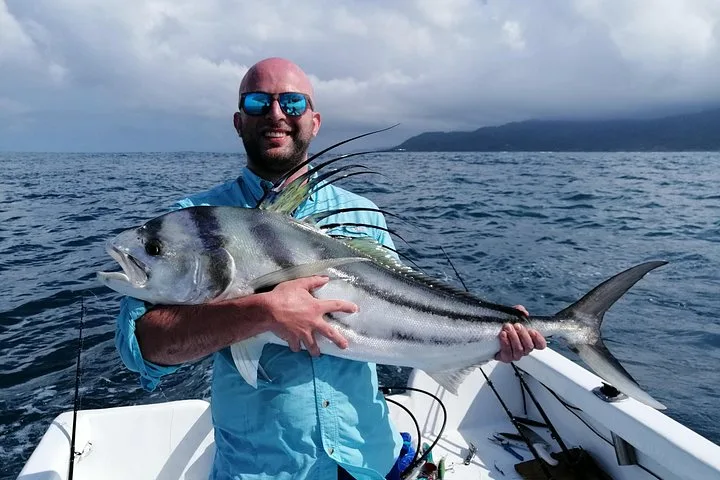
Sport Fishing in Guanacaste: The Best Season Is the One You Were Avoiding
Guanacaste Experiences editorial team
·
6 October 2026
·
5 min read
In this guide
Peak season is May to SeptemberThe licence is not optionalYou are not keeping the billfishWhat a trip costs, and the question to ask about itIf you have never done thisMost people book a charter here on the assumption that the best time to fish is the best time to be on holiday. In Guanacaste those are close to opposites.
Peak season is May to September
Guanacaste is the North Pacific for fishing purposes, and its calendar runs against the Central Pacific one most Costa Rica fishing articles describe.
Published seasonal guidance for the North Pacific (Guanacaste).
| Species | Peak | Note |
|---|---|---|
Sailfish | May to September | Best bite often given as May–August; the Central Pacific peaks December–April instead |
Marlin | May to September | Good marlin and tuna through to November |
Tuna | May to November | Overlaps the whole green season |
That is the green season — the months with the lower prices, the thinner crowds and the afternoon rain. For anyone whose trip is built around fishing, that is a useful inversion: the cheapest time to come is also the best time to be out there. Our month-by-month guide covers what the weather is actually doing then.
You can fish here in the dry season and people do. You are simply fishing the shoulder of the North Pacific calendar rather than its peak.
The licence is not optional
Every angler over the age of 16 is legally required to carry a valid licence issued by INCOPESCA, the Costa Rican fisheries institute. It is not expensive and it is not difficult, and it is the single most commonly skipped step.
$15 for 8 days
$30 for a month
$50 for a year
Same price for nationals and foreigners, and available online at incopesca.go.cr before you travel.
Ask who is buying it
Some charters include the licence and some assume you have one. The phrasing to use when booking is not "do I need a licence" but "is the licence included in this price, or should I buy it myself before I arrive?" Those get different answers.
You are not keeping the billfish
This surprises people who have fished elsewhere, and it is worth understanding before you are holding the rod.
All billfish must be released alive by law — sailfish, marlin, spearfish. And the law goes further than catch-and-release normally does: billfish cannot be removed from the water for photographs. Lifting a large fish into a boat damages its protective slime coating and its internal organs, so the photograph is taken with the fish held alongside the boat, in the water, and then it goes.
Circle hooks are mandatory in Costa Rica, for the same reason: they tend to catch in the jaw rather than being swallowed, which makes release survivable.
None of this applies in the same way to edible species like dorado, tuna and wahoo, where the convention is that you keep what you will eat and the crew keeps the rest. If eating your catch matters to you, say so when booking and ask what the boat’s policy is — it varies.
What a trip costs, and the question to ask about it
There is one fishing trip listed on this site: an inshore trip from Santa Teresa at from $360 for 3.5 hours, and the listing marks that price per person.
That is worth pausing on, because charters are more often priced per boat — you hire the vessel and split it. A per-person price for a half-day inshore trip is at the high end, and it may be a listing convention rather than the real structure. Ask directly: *is this per person or for the boat, and how many anglers does that cover?* The same question changes the arithmetic on nearly every charter, and our private vs group guide covers why that distinction catches people out across the whole catalogue.
Otherwise, the usual distinctions apply. Inshore is closer, shorter, cheaper, and targets roosterfish, snapper, jack and similar. Offshore is a full day running out to blue water for billfish and tuna, costs considerably more, and is the one the seasons above actually describe.
If you have never done this
1.
Book inshore first. A half-day close to shore tells you whether you enjoy it before you commit to ten hours and a much larger bill.
2.
Take seasickness medication before you board, not when you start to feel it. Offshore days are long and the swell is not negotiable.
3.
Expect to be out early. Most boats leave not long after first light, which in Guanacaste is around 5:30am.
4.
Ask what is included — rods, bait, licence, lunch, drinks. The variation between boats is large.
5.
Agree what happens to edible fish before you leave the dock, so nobody is disappointed at the end.
See the fishing trip listing
Confirm whether the price is per person or per boat before booking.
Do you need a fishing licence in Costa Rica?
Yes. Every angler over 16 is legally required to carry a licence issued by INCOPESCA. It costs $15 for eight days, $30 for a month or $50 for a year, the same for nationals and foreigners, and can be bought online at incopesca.go.cr before you travel. Some charters include it; ask explicitly rather than assuming.
When is the best time for sport fishing in Guanacaste?
May to September for sailfish and marlin, with good tuna through to November. That is the green season, which means the best fishing coincides with lower prices and fewer visitors. The December-to-April peak that most Costa Rica fishing articles describe applies to the Central Pacific, not to Guanacaste.
Can you keep the fish you catch in Costa Rica?
Not billfish. Sailfish, marlin and spearfish must be released alive by law, and the law also forbids removing them from the water for photographs — the picture is taken with the fish alongside the boat. Circle hooks are mandatory to make release survivable. Edible species such as dorado, tuna and wahoo are a different matter, but policies vary by boat, so agree it before you sail.
How much does a fishing charter cost in Guanacaste?
The inshore trip listed on this site is from $360 for 3.5 hours, marked per person. Charters are more commonly priced per boat, so always confirm which you are being quoted and how many anglers that covers — it is the single biggest variable in the price.
What is the difference between inshore and offshore fishing?
Inshore stays close to the coast, runs a half day, costs less and targets roosterfish, snapper and jacks. Offshore is a full day running out to blue water for billfish and tuna, and is what the May-to-September season refers to. First-timers are usually better off starting inshore.
Sources
Facts in this guide were checked against these references on the dates shown.
FECOP (Federación Costarricense de Pesca) — Costa Rica fishing licence — Every angler over the age of 16 is legally required to carry a valid fishing licence issued by INCOPESCA, the Costa Rican Institute of Fisheries and Aquaculture. The licence costs $15 for 8 days, $30 for a month and $50 for a year, the same for nationals and foreigners, and can be bought online at incopesca.go.cr before travelling. (accessed 6 October 2026)
FECOP — Billfish angler’s guide to Costa Rica — All billfish must be released alive by law, and by law billfish cannot be removed from the water for photographs — lifting a fish into the boat damages its protective slime coating and internal organs, so fish are held alongside the boat for photographs before release. The use of circle hooks is mandatory in Costa Rica. (accessed 6 October 2026)
Central America Fishing — Costa Rica fishing calendar — In the North Pacific (Guanacaste) sailfish peak from May through September and the best bite is given as May to August, against December to April in the Central Pacific. Marlin peak in Guanacaste is May to September, with good marlin and tuna fishing from May to November. (accessed 6 October 2026)
Guanacaste Experiences — fishing tour listing — An inshore fishing trip from Santa Teresa is listed from $360 for 3.5 hours, with the listing marking the price as per person. (accessed 6 October 2026)
Plan this trip
Browse the tours that fit what you’ve just read — real operators, real prices, book direct.
Fishing trips