Activities
Bioluminescence Tours in the Nicoya Peninsula: The Moon Decides
Guanacaste Experiences editorial team
·
5 October 2026
·
9 min read
Hero photo: latforum / Wikimedia Commons (CC BY 3.0)
In this guide
What you will actually seeThe moon decides, not the seasonWhere this actually happens, and how far it really isWhat is actually in the waterKayak or boatWhat not to put on your skinWhy your photographs will disappoint youIf the moon is wrong on your only free nightThere is a specific disappointment that comes with a bioluminescence tour, and it is almost always avoidable. You book weeks ahead, you drive an hour and a quarter in the dark, you get in a kayak — and the water does something faint and grey that you have to squint at, while the guide says apologetically that it is usually much better.
It usually is much better. The variable almost nobody checks is the moon. A bright moon floods the water with far more light than the plankton produce, and no operator, boat or price can compensate for that. Get the moon right and the same bay is genuinely extraordinary.
What you will actually see
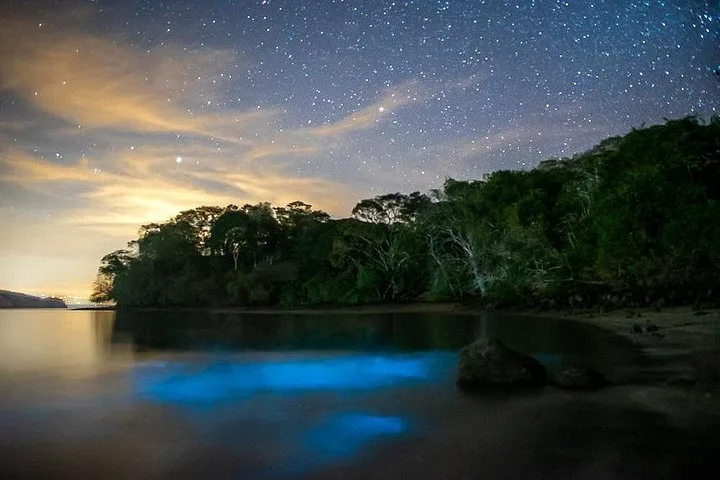
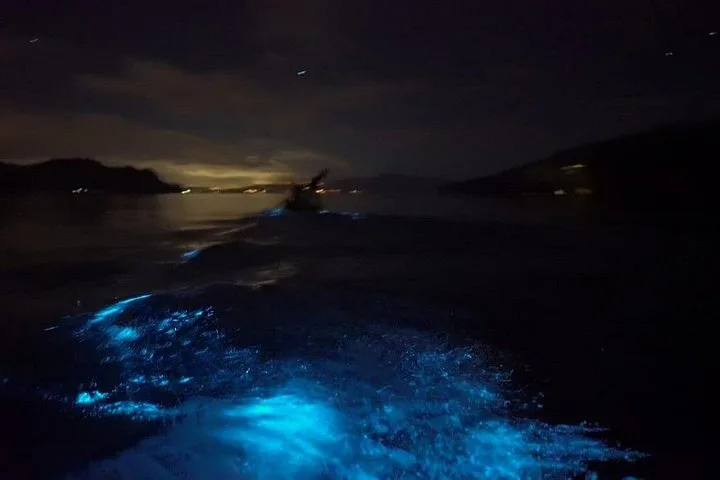
Set your expectations against reality rather than against the photographs. You will not see a steadily glowing blue bay. The organisms light up when the water around them is disturbed, so what you see is motion made visible: your paddle blade leaving a trail of sparks, a handful of water throwing glitter as it falls, a fish crossing under the boat as a comet.
The colour is usually a cold blue-white or blue-green, closer to a glow-stick than to neon. On the best nights it is bright enough to light your hands. On the worst it is a faint shimmer you notice only once your eyes have properly adapted, which takes a good twenty minutes with no phone screens.
The twenty-minute rule
Your night vision needs about twenty minutes in genuine darkness to reach anything like full sensitivity, and one look at a phone screen resets much of it. The travellers who come back raving are almost always the ones who put the phone away at the dock and left it there.
The moon decides, not the season
Operators describe Nicoya bioluminescence as year-round, and in the sense that the organisms are present all year, that is true. It is also the least useful thing you can be told, because it implies any night will do.
One operator is straightforward about it. The listing for Eddy’s Bioluminescence Reserve in Punta Cuchillos states plainly that the bioluminescence is affected from seven days before the full moon. That is the honest version, and it should be on every listing.
The rule is simple: book as close to the new moon as you can. Three nights either side is the reliable window. Within a week of the full moon, go only if you have no choice, and expect less.
Dark-night windows through the 2026–27 season. New moon times are from the US Naval Observatory, converted to Costa Rica local time — Costa Rica does not use daylight saving.
New moon (Costa Rica time)
Best nights
Avoid roughly
Sat 10 October 2026
7–13 October
19–29 October
Mon 9 November 2026
6–12 November
18–28 November
Tue 8 December 2026
5–11 December
17–27 December
Thu 7 January 2027
4–10 January
16–26 January
Sat 6 February 2027
3–9 February
15–25 February
Mon 8 March 2027
5–11 March
17–27 March
Tue 6 April 2027
3–9 April
15–25 April
Thu 6 May 2027
3–9 May
15–25 May
There is a second, smaller timing question inside the night itself. Even in a dark-moon week, the moon may be above the horizon for part of the evening. A tour that starts after moonset on a waning night can be excellent; the same date three hours earlier may not be. If you are booking tight to the edge of a window, ask the operator what time the moon sets that night — a good one will know.
Where this actually happens, and how far it really is
This is the part that catches people out. The bioluminescence tours sold across the southern Nicoya Peninsula are almost all run in the sheltered water around Paquera and Punta Cuchillos, on the inner, Gulf of Nicoya side of the peninsula — not on the Pacific surf coast where most visitors are staying.
That matters because the listings are tagged to Santa Teresa. From Santa Teresa, Paquera is 43.3 km and about 75 minutes each way without stops. It is the same point this site makes about Paquera departures in the Santa Teresa day trips guide: a tour marketed as leaving "from Paquera" starts over an hour from where you are sleeping.
The geography is also the reason the tours work. The inner gulf is shallow, sheltered and often glassy, which keeps the water calm enough to kayak at night and lets surface concentrations build. The Pacific side has surf — wonderful for almost everything else on this coast, useless for this.
Check what is included before you book
Transport from Santa Teresa, Cóbano or Montezuma is sometimes included and sometimes not. If it is not, you are driving Ruta 160 both ways in the dark after a late finish, and the return leg is the one nobody plans for. Confirm pickup in writing rather than assuming.
What is actually in the water
Most travel writing says "plankton" and stops. The real answer in this gulf is more interesting, and more uncertain than operators suggest.
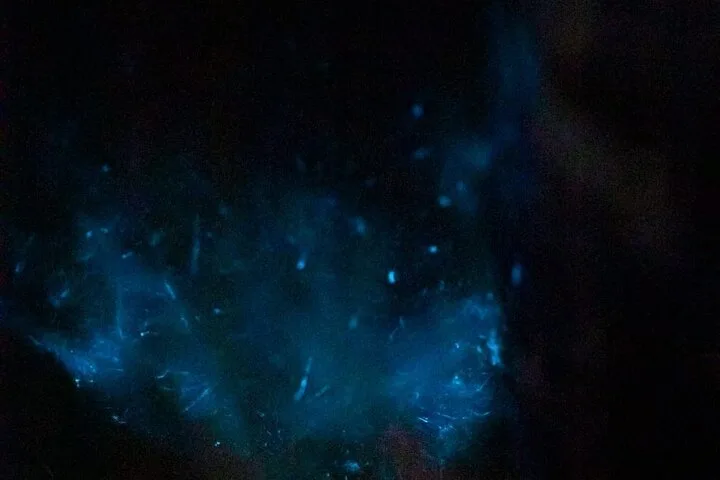
In February 2026, researchers documented an extensive bioluminescent bloom at Paquera, Isla Cedros and Punta Cuchillo — exactly the tour grounds. It consisted almost entirely of the heterotrophic dinoflagellate Noctiluca scintillans, at between 1.7 × 10³ and 1 × 10⁶ cells per litre, with surprisingly few bioluminescent bacteria. By day the water was intensely orange, with dense surface aggregations; by night it glowed strongly. The paper records this as a first report of extensive blooms of that species in the Gulf of Nicoya.
Two honest caveats follow from that. First, it documents a notable bloom event, not the routine nightly glow — so it would be wrong to tell you that what you see on an ordinary night is Noctiluca. Second, the gulf also has a documented history of Pyrodinium bahamense, another bioluminescent dinoflagellate, which is a harmful-algal-bloom species associated with paralytic shellfish toxins elsewhere in its range.
None of that makes a night paddle dangerous — these are surface organisms you look at, and the risk associated with toxic blooms runs through shellfish, not through sitting in a kayak. But it is a reason to take local advice seriously if a bloom is visibly in progress, and a reason to be suspicious of anyone who tells you the biology here is simple and settled.
Kayak or boat
Both work. The difference is how close you get to the water and how much effort you supply.
The bioluminescence tours currently listed on this site. Ratings and durations are from the operator listings and move over time.
Tour
Format
Length
Rating
The kayak tours rate higher, and the reason is physical rather than commercial: in a kayak your hands and paddle are in the water, so you generate the effect continuously and see it at arm’s length. From a boat you see the wake and whatever the crew stirs up, which is impressive but more distant. Engine noise and deck lighting do not help either.
Choose the boat anyway if you are nervous on the water, travelling with small children, or going on a night at the edge of the moon window — a boat covers more water and can move to find a better patch. Choose a kayak on a true dark night.
What not to put on your skin
Standard practice among bioluminescence operators worldwide is to ask guests not to enter the water wearing sunscreen, insect repellent, lotions or perfume, on the basis that the chemicals harm fragile surface organisms. Many go further and ask you not to apply them at all before the tour.
This is operator guidance rather than a settled scientific result, and we have not found a study that quantifies the effect in this gulf specifically. It is also cost-free to follow: you are going out after dark, so you do not need sunscreen, and a long-sleeved layer handles mosquitoes better than repellent you would rather not rinse into the bay. Apply what you need after you are back on land.
A long-sleeved layer and trousers — more effective than repellent, and the water is cooler than you expect after sunset.
Clothes you do not mind soaking. Kayaks and dry are not close friends.
A towel and a dry change in the car for the drive home.
A head torch with a red mode, if you have one. White light ruins everyone’s night vision, including yours.
No phone, or a phone that stays in a dry bag and switched off.
Why your photographs will disappoint you
Worth knowing in advance so you do not spend the tour trying. Phone cameras cannot usefully capture this. The light is faint, it is moving, and it lasts a fraction of a second — the three conditions a phone sensor handles worst. Night mode needs the subject to hold still for several seconds, which is precisely what sparks do not do.
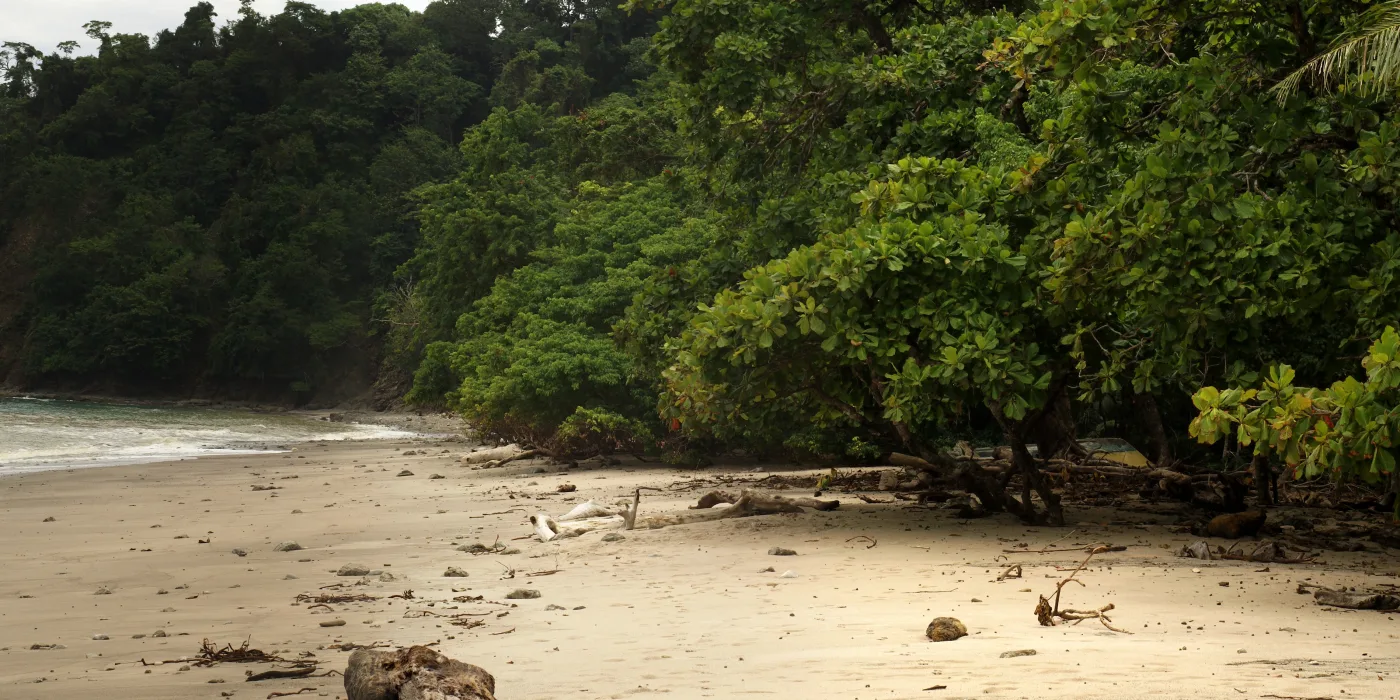
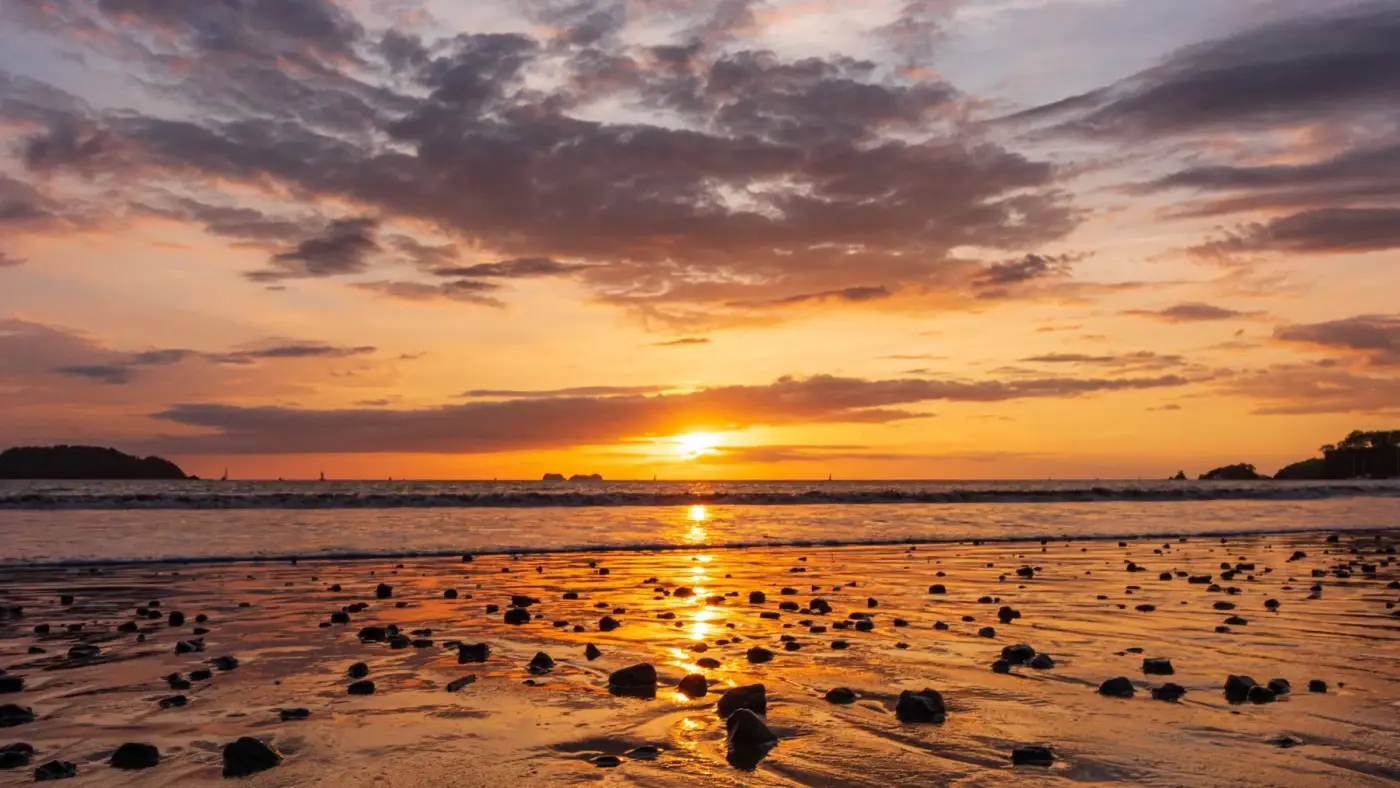
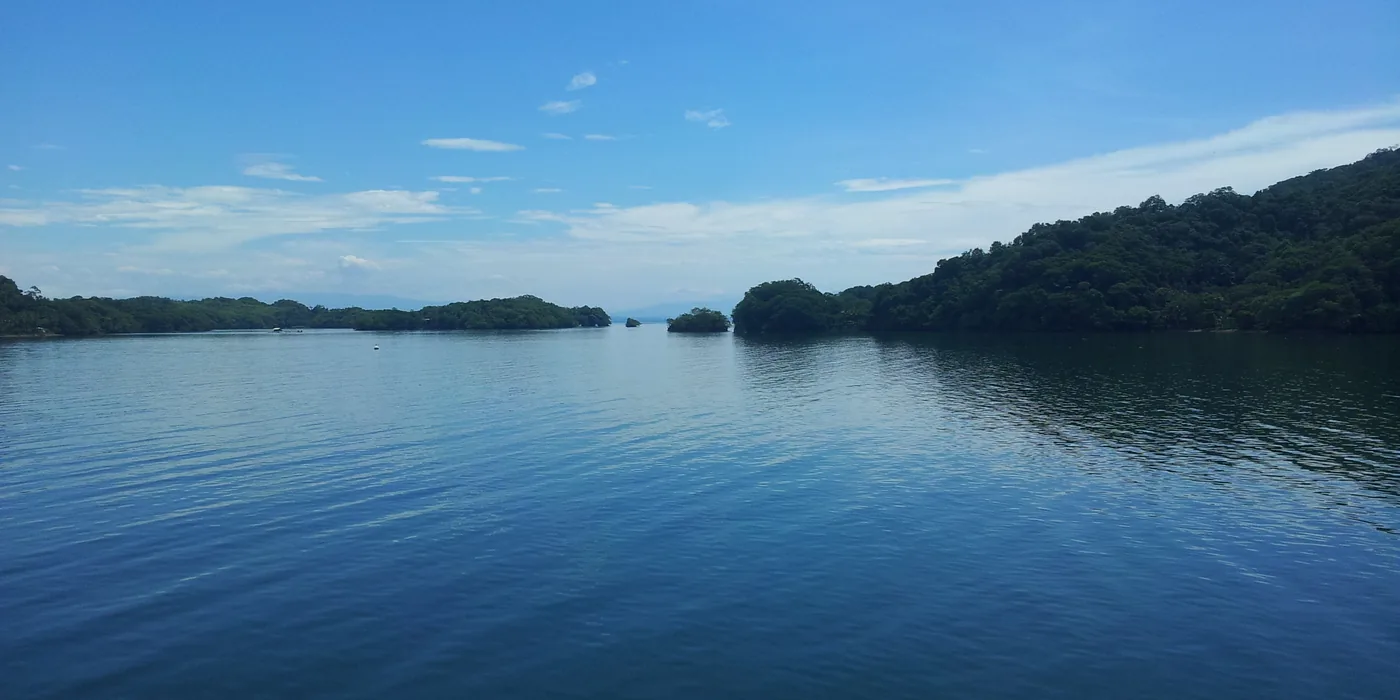
The glowing-water images you have seen are long exposures on a tripod with a fast lens, or they are composites, or they are from somewhere else entirely. That is why the photograph at the top of this page shows the bay in daylight. We would rather show you the real place than a processed image of a glow you will experience differently.
If the moon is wrong on your only free night
Sometimes the dates simply do not line up. Three honest options.
1.
Go anyway, with adjusted expectations and a boat. A guide who can reposition will find the best available water, and a faint display still beats not seeing it. Just do not pay a premium for it.
2.
Move the night, not the trip. The windows in the table above run a week. If you are in the area for a fortnight, there is nearly always a workable night — it is usually the itinerary that is inflexible, not the sky.
3.
Spend the night on something the moon helps. A bright moon is good for beach walking and for turtle nesting in season. Trading one night-time wildlife experience for another is better than a dim paddle.
If you are still working out when to come at all, the month-by-month guide and the best time to visit cover the wider seasonal picture this sits inside.
See bioluminescence tours in Nicoya
Check the date against the dark-night table above before you book.
Is bioluminescence in Costa Rica really year-round?
The organisms are present all year in the Gulf of Nicoya, so in that sense yes. But visibility swings enormously with the moon. A new-moon night and a full-moon night in the same week are completely different experiences, and the season you visit matters far less than the moon phase you book.
When is the best time to book a bioluminescence tour?
Within three nights either side of a new moon. The next new moons in Costa Rica local time are 10 October 2026, 9 November 2026, 8 December 2026, 7 January 2027 and 6 February 2027. Avoid the week around each full moon.
Where do bioluminescence tours in the Nicoya Peninsula leave from?
Almost all of them run in the sheltered water near Paquera and Punta Cuchillos, on the Gulf of Nicoya side of the peninsula. Despite being listed under Santa Teresa, that is 43.3 km and about 75 minutes away by road, so check whether transport is included.
Can you swim in the bioluminescence?
It depends on the operator and the conditions — some allow it, some do not. If you do, go in without sunscreen, repellent or lotions on your skin, which is what operators ask for the organisms’ sake.
Kayak or boat for bioluminescence?
Kayak on a genuinely dark night: your paddle and hands make the effect continuously and you see it from inches away. Boat if you are unsteady on the water, have young children, or are going on a night near the edge of the moon window, when the ability to move and find better water is worth more.
Can you photograph bioluminescence with a phone?
Realistically, no. The light is faint, moving and brief, which is the hardest combination for a phone sensor. The striking images online are long exposures on tripods, composites, or taken elsewhere. Plan to watch it rather than record it.
Sources
Facts in this guide were checked against these references on the dates shown.
US Naval Observatory — Astronomical Applications, moon phase data — New moon times used in the dark-night table, retrieved from the USNO phases API and converted to Costa Rica local time (UTC−6, no daylight saving). New moons fall on 10 Oct 2026, 9 Nov 2026, 8 Dec 2026, 7 Jan 2027, 6 Feb 2027, 8 Mar 2027, 6 Apr 2027 and 6 May 2027 local time. (accessed 5 October 2026)
Vargas-Montero, Marín-Vindas, Guzmán-Sánchez & Vega-Corrales — “Who turned on the light? First report of extensive bioluminescent blooms of the heterotrophic dinoflagellate Noctiluca scintillans with low abundance of bioluminescent bacteria in the Gulf of Nicoya, Costa Rica” — UNESCO Harmful Algae News no. 83 (2026), pp. 17–19. Reports a February 2026 bloom at Paquera, Isla Cedros and Punta Cuchillo in the Gulf of Nicoya, consisting almost exclusively of Noctiluca scintillans at 1.7 × 10³ to 1 × 10⁶ cells per litre, with water intensely orange by day, dense surface aggregations and marked nocturnal bioluminescence. Described as a first report of extensive blooms of this species there, so it documents a notable event rather than the routine nightly glow. (accessed 5 October 2026)
Guanacaste Experiences — The Best Day Trips from Santa Teresa & Mal País — Santa Teresa to Paquera is 43.3 km, about 75 minutes one way without stops, by OpenStreetMap routing; Ruta 160 between Paquera and Cóbano is 33.66 km of continuous asphalt; tours marketed as departing from Paquera start over an hour from Santa Teresa. (accessed 5 October 2026)
Viator — Eddy’s Bioluminescence Reserve in Punta Cuchillos (operator listing) — The operator’s own listing states that bioluminescence is affected from seven days before the full moon, and rates the experience 4.86 from 122 reviews. Tour durations and ratings for the four bioluminescence products are taken from their listings as shown on this site. (accessed 5 October 2026)
Plan this trip
Browse the tours that fit what you’ve just read — real operators, real prices, book direct.
Browse bioluminescence tours