Destinations
Santa Teresa vs Nosara: The Five Hours Between Them
Guanacaste Experiences editorial team
·
6 October 2026
·
9 min read
In this guide
Why forty kilometres takes six hoursOne of them you can fly toThe surf is not the same propositionNeither is a swimming beachWhat the towns are actually likeOne is in Guanacaste. The other is not.What is next door to eachSo which oneCan you do both?Open a map and these two look like neighbours: two surf towns on the same stretch of Nicoya coast, roughly 40 km apart. Pick either one, you think, and you can always drive over to see the other.
You cannot, really. The shuttle operator that runs the route schedules five to six hours one way. That single number is the most useful thing in this comparison, and almost nothing else you read about these towns will mention it.
Why forty kilometres takes six hours
There is no coast road worth the name. To get from one to the other you go inland and most of the way around: up through Cóbano, out to the Paquera ferry or the long way round the Gulf, up through Nicoya, then back down to the coast. The direct-looking coastal track exists, but it crosses rivers and turns to mud, and this site already warns in the three-way Nosara comparison that the river between Ostional and Nosara is sometimes impassable even with the newer bridge.
The deeper reason is in the government’s own paperwork. In the February 2026 national road inventory, no national route reaches Santa Teresa or Mal País at all. Ruta 160 runs paved from the Paquera ferry junction to Cóbano — 33.66 km of asphalt, posted at 35 to 50 km/h — and north-west of Cóbano the same route is recorded as gravel, in "frequent potholes or irregularities" condition, with drainage classed as inadequate. The roads that actually serve Santa Teresa are cantonal: a local responsibility, on a local budget.
Do not trust your maps app on this route
Routing engines send you down the unpaved coastal road and return times less than half what shuttle operators publish. That gap is the single most common way visitors here misjudge a day. For anything beyond Paquera, believe the operator, not the app.
One of them you can fly to
This is where the practical difference becomes a difference in your itinerary.
Getting to each town. Shuttle and flight figures are operator-published for September–October 2026 and move with the season.
| Nosara | Santa Teresa | |
|---|---|---|
By air | Sansa flies SJO to Nosara in about 45 minutes, around $99 one way | Nearest airstrip is Tambor, then about 1 hour by road |
Shared shuttle from SJO | $91 (Interbus) to $97 (Tropical Tours), about 5½ hours | About 5 hours, plus the ferry crossing |
Public bus from San José | ₡4,350 | Bus to Puntarenas, ferry, then onward bus |
From Liberia (LIR) | The usual road approach for Guanacaste arrivals | 5–6 hours |
Ferry involved? | No | Usually yes — ₡810 adult, ₡480 child, Puntarenas to Paquera |
Read that table as a time budget rather than a price list. Nosara can be a 45-minute flight from San José. Santa Teresa is most of a travel day from almost anywhere, in both directions. On a seven-night trip that is roughly a quarter of your holiday spent in transit, and it is the reason Santa Teresa rewards people who stay put and punishes people touring the country.
If you are flying into Liberia specifically, our LIR vs SJO guide is blunter: for the southern peninsula, Liberia is often the wrong airport.
The surf is not the same proposition
Both towns are sold as surf towns, which hides a real difference in what the water asks of you.
Nosara’s Playa Guiones runs about 7 km with a consistent beach break that works at almost any state of tide. That consistency is why surfers of every level base themselves there: there is nearly always a rideable wave, and there is room for a lesson to happen a long way from anyone doing turns.
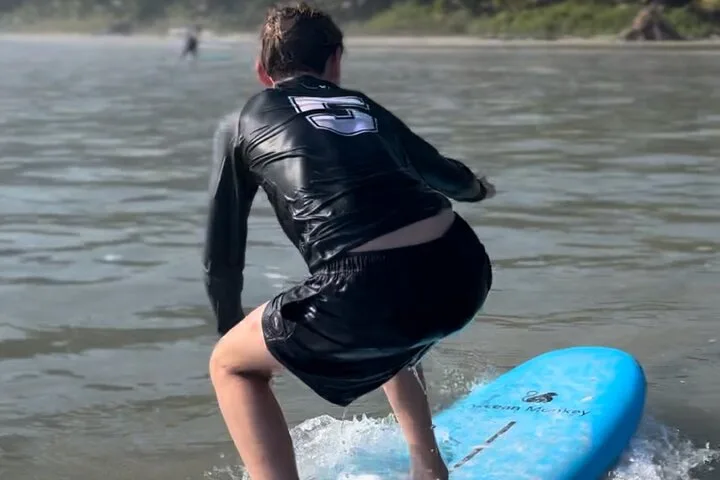
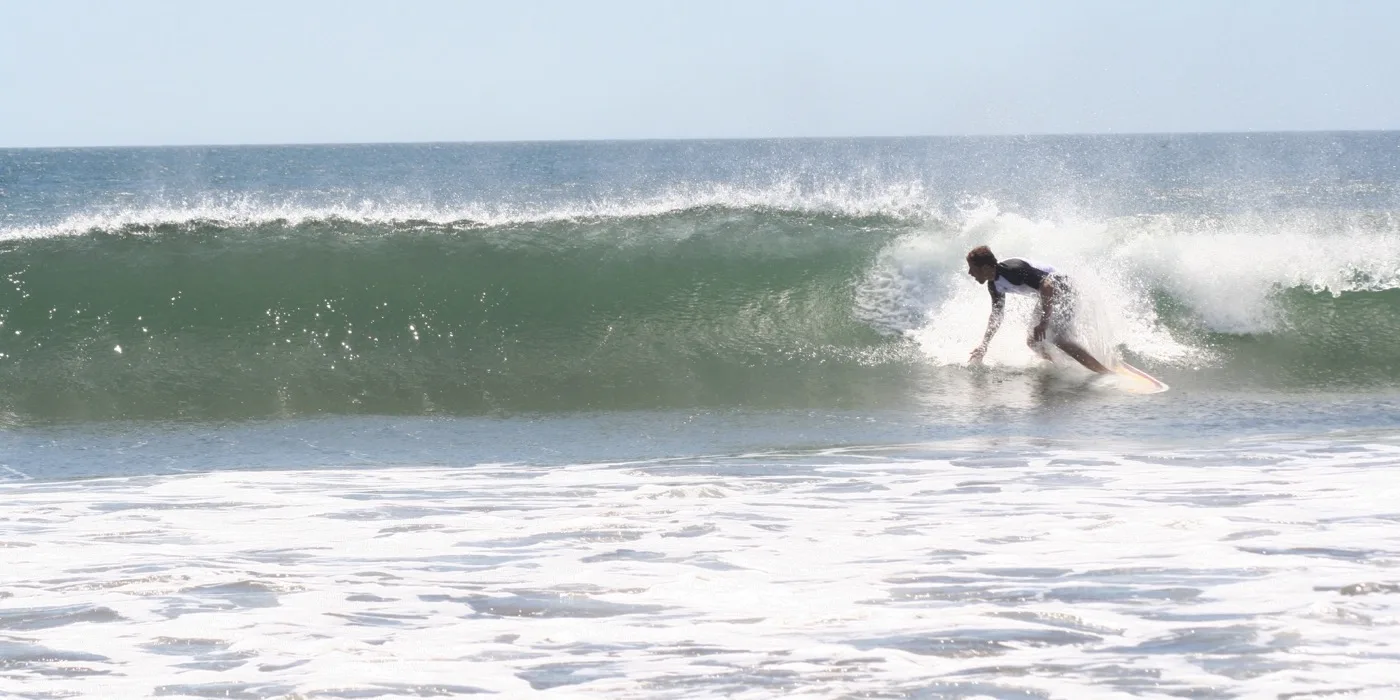
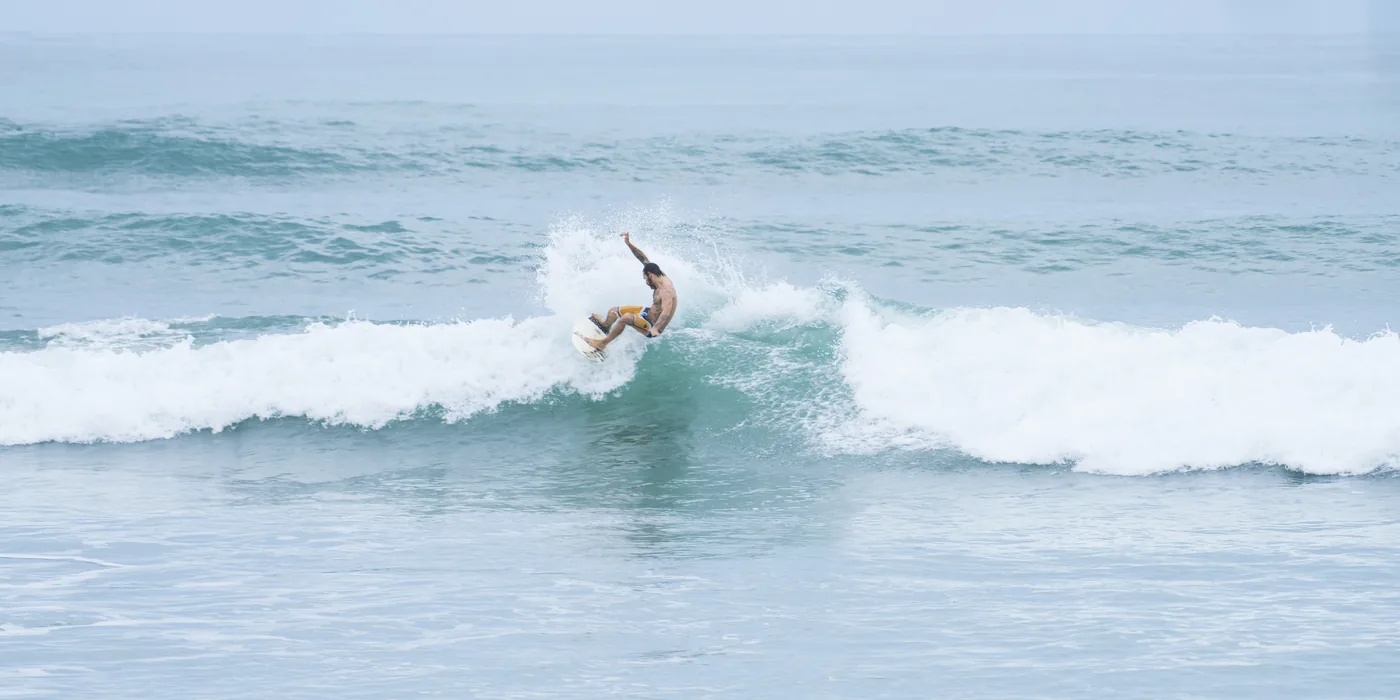
Santa Teresa is a longer, more exposed strip — Playa Carmen, Santa Teresa proper, Playa Hermosa, with Mal País south of them — and it has more punch. It is popular with people who already surf and want a wave with some drive in it. That is the hero photograph on this page: a real wave being surfed with commitment, not a gentle beginner roller.
None of that makes one town right for beginners and the other wrong. Lessons run in both, conditions change daily, and the honest version is that a beach-level generalisation cannot tell you whether the water is suitable on the morning you are standing in it. Ask the school, look at the sea, and see our learning to surf guide for how to pick one. If you have already settled on Santa Teresa, lessons at the Playa Carmen end of the strip are the usual place to start.
Neither is a swimming beach
Worth saying plainly, because the photographs of both places show inviting water. The same waves and rip currents that make Guiones good for surfing make Nosara’s beaches poor for casual swimming, and the Santa Teresa strip is no gentler. If what you want is a beach where you can float about and let small children paddle, you are looking at the wrong two towns — that is what the calm bays further north do well.
Drowning is the leading cause of unintentional death among international visitors to Costa Rica, and almost none of these beaches are lifeguarded. The safety guide covers what that means in practice.
What the towns are actually like
Nosara is not one place but several: Playa Guiones is the walkable hub, Playa Pelada is quieter, Boca Nosara is residential, and the original village sits inland, with its own life that has nothing to do with tourism. It draws surfers and wellness travellers, and there are a lot of yoga studios. Evenings are low-key. If you want nightlife, this is not it.
Santa Teresa is strung out along one dusty road running parallel to the sea, and it is louder. More bars, more restaurants that stay open, a younger and more international crowd, and a scene that genuinely does not stop in high season. The flip side of being hard to reach is that the people who make it there tend to stay a while, and the town is built for them rather than for day visitors.
Both have unpaved main streets. In the dry season that means dust on everything; in the green season it means mud. Neither town hides this and you should not be surprised by it.
One is in Guanacaste. The other is not.
A small thing that causes real confusion when booking. Nosara is in Guanacaste. Santa Teresa, Mal País and Montezuma are in Puntarenas province, even though they are on the same peninsula and get marketed under the same "Guanacaste" banner.
It matters mostly for transfers and for reading other people’s advice: a shuttle quote, a regional weather note or a "best beaches in Guanacaste" list may simply not include Santa Teresa, not because it is not worth going to, but because it is administratively somewhere else.
What is next door to each
The two towns have very different things within reach, and this is where a tie gets broken.
From Santa Teresa, the standout is Cabo Blanco, established on 21 October 1963 and the beginning of Costa Rica’s protected-area system. It is open Wednesday to Sunday, 8am to 4pm, at $12 for non-residents and ₡1,600 for residents, and it recorded 11,799 visits across 2025 — which, spread over its open days, is a quiet reserve by Costa Rican standards.
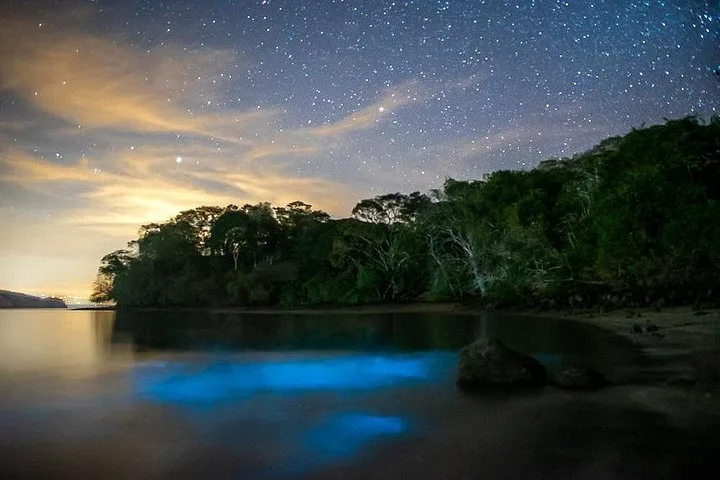
Montezuma and its waterfall are 40 minutes away, and the bioluminescence kayak tours that leave from Paquera are a 75-minute drive — worth timing to the dark half of the month, as the bioluminescence guide explains. Our day trips guide has the full set with honest drive times.
From Nosara, the draw is Ostional and its mass turtle arrivals, plus easier access to the rest of Guanacaste — Sámara, Nicoya, and the northern beaches are all reachable in a way that nothing is from Santa Teresa. The sea turtle guide covers when the arribadas actually happen and how to watch without harming them.
So which one
The short version.
| If this is you | Go to |
|---|---|
You already surf and want a wave with drive | Santa Teresa |
You are learning, or surfing is one thing among several | Nosara |
You have seven nights or fewer and want to see other places too | Nosara — Santa Teresa will eat two of those days in transit |
You are staying two weeks or more and want to settle in | Santa Teresa |
You want yoga, early nights and a quiet beach town | Nosara |
You want somewhere with a scene after dark | Santa Teresa |
You are flying into Liberia and will not change that | Nosara |
You want turtles at scale | Nosara, for Ostional |
You want an empty, historic reserve and a waterfall | Santa Teresa, for Cabo Blanco and Montezuma |
Can you do both?
Yes, but budget for it honestly. Five to six hours between them means a travel day, not a morning — and doing it as a round trip costs you two. On a fortnight that is reasonable: split the trip, treat the transfer as the price, and you see two genuinely different places. On a week it is a bad trade, and you will spend more of your holiday in a van than in the sea.
The better version of "both", if you have the days, is to make the transfer itself worth something. Breaking the journey at Sámara, which the same operator lists at 4½ to 5 hours from Santa Teresa, turns one punishing leg into two manageable ones and puts a calm swimming beach in the middle of your trip — which, after a week at two surf beaches, is less of a compromise than it sounds.
Compare where to stay across Guanacaste
Covers Nosara against the northern beaches if Santa Teresa is already out.
How long does it take to get from Santa Teresa to Nosara?
The shuttle operator running the route publishes five to six hours one way, despite the towns being only about 40 km apart on the map. There is no usable coast road, so the journey goes inland via Cóbano and Nicoya. Do not trust a maps app here — routing engines send you down the unpaved coastal road and return times less than half what operators actually quote.
Which is better for beginner surfers, Santa Teresa or Nosara?
Nosara is the more common choice. Playa Guiones has a consistent beach break over about 7 km that works at almost any tide, so there is room and there is nearly always a wave. Santa Teresa has more power and suits people who already surf. That said, conditions change daily at both, so ask the surf school on the day rather than relying on the town’s reputation.
Can you swim at Santa Teresa or Nosara?
Neither is a good swimming beach. The waves and rip currents that make them good for surfing make them poor for casual swimming, and they are not lifeguarded. If you want calm water for floating or for small children, the sheltered bays further north in Guanacaste are the better choice.
Is Santa Teresa in Guanacaste?
No. Santa Teresa, Mal País and Montezuma are in Puntarenas province, even though they share the Nicoya Peninsula with Guanacaste and are often marketed together. Nosara is in Guanacaste. The distinction matters when you are reading shuttle routes or regional guides that may leave Santa Teresa out entirely.
What is the easiest way to reach Santa Teresa?
Most people take a shuttle from San José, around five hours including the Puntarenas–Paquera ferry (₡810 for adults, ₡480 for children). Flying to Tambor and driving the last hour is quicker but more expensive. From Liberia it is five to six hours, which is why Liberia is often the wrong airport for the southern peninsula.
Should I visit both Santa Teresa and Nosara on the same trip?
Only with two weeks or more. A round trip between them costs two travel days, which is a poor trade on a week-long holiday. If you do split the trip, consider breaking the journey at Sámara — the same operator lists it at four and a half to five hours from Santa Teresa, and it has the calm swimming water neither surf town offers.
Sources
Facts in this guide were checked against these references on the dates shown.
Tropical Tours Shuttles — published route times from Santa Teresa — Operator-published one-way journey times from Santa Teresa: Nosara 5–6 hours; Liberia (Daniel Oduber Quirós) 5–6 hours; San José airport about 5 hours; Sámara 4½–5 hours "depending on the road conditions" at $60 shared and $260 private; Tambor airport 1 hour. (accessed 23 September 2026)
MOPT / CONAVI — Red Vial Nacional, February 2026 inventory (ArcGIS FeatureServer) — Ruta 160 from the Paquera ferry junction to Cóbano is fully asphalted across sections 60811, 60812 and 60813, totalling 33.66 km, with posted speeds of 40, 50 and 35 km/h. North-west of Cóbano the same route is gravel ("Lastre o grava") in "Superficie con frecuentes baches o irregularidades" condition with drainage recorded as inadequate. A geographic query over a box enclosing Santa Teresa, Playa Carmen, Playa Hermosa and Mal País returns no national-route section serving Santa Teresa or Mal País: those roads are cantonal, not national. (accessed 23 September 2026)
OpenStreetMap routing via the OSRM public routing engine — Free-flow driving estimates one way from Santa Teresa: Playa Carmen 0.9 km/3 min; Mal País 6.7 km/17 min; Cóbano 9.7 km/27 min; Montezuma 15.1 km/40 min; Paquera 43.3 km/75 min. Beyond Paquera the engine is unreliable here because it routes via the unpaved coastal road and returns times far shorter than operators publish. (accessed 23 September 2026)
Guanacaste Experiences — San José (SJO) to Guanacaste — Sansa flies from SJO’s domestic terminal to Nosara in about 45 minutes, with one-way foreigner fares around $99 for September–October 2026. Interbus charges $91 per adult to Nosara and Tropical Tours $97 per person, quoted at about 5½ hours. The public bus from San José to Nosara, Sámara and Nicoya is ₡4,350. (accessed 6 October 2026)
Guanacaste Experiences — The Best Day Trips from Santa Teresa & Mal País — Regulated passenger fares on the Puntarenas–Paquera ferry operated by Naviera Tambor S.A. are ₡810 for adults and ₡480 for children. Cabo Blanco was established on 21 October 1963, is open Wednesday to Sunday 8am–4pm, and admission is ₡1,600 for residents and $12 for non-residents; it recorded 11,799 visits in 2025. (accessed 6 October 2026)
Guanacaste Experiences — Tamarindo vs Playas del Coco vs Nosara — Playa Guiones runs for about 7 km with a consistent beach break that works almost any time of day, which is why surfers of all levels base themselves there; the same waves and rip currents make Nosara’s beaches poor for casual swimming. Nosara is several areas — Playa Guiones, quieter Playa Pelada, residential Boca Nosara and the original village inland. The coastal route via Ostional gets muddy and the river is sometimes impassable even with the newer bridge. (accessed 6 October 2026)
Plan this trip
Browse the tours that fit what you’ve just read — real operators, real prices, book direct.
Day trips from Santa Teresa